7 Best Veiled Chameleon Foods (2026): Feeder Insects, Gut Loads & Greens
Veiled chameleons eat both insects AND plants — and female overfeeding triggers deadly mega-clutches. We ranked 7 best veiled chameleon foods for 2026: staple feeders, gut loads, and safe greens.


This article contains affiliate links. If you make a purchase through these links, we may earn a small commission at no extra cost to you. See our affiliate disclosure for details.
We recommend 7 picks here. Our top choice is the Dubia Roaches (Medium, Live) — check price and availability below.
How we choose: we compare published specifications against the care requirements in veterinary and species-care literature, and weigh those against what long-time keepers report. We do not test products ourselves and we do not restate Amazon star ratings. The 2 sources behind this article are listed at the bottom.
Quick Comparison
- Type
- Live Feeder
- Protein % (DM basis)
- ~65%
- Ca:P Ratio
- ~1:3 (dust required)
- Moisture Content
- ~65%
- Feeding Frequency
- Daily staple
- Shelf Life
- Weeks (colony or order fresh)
- Price per Feeding
- $$
- Type
- Live Feeder
- Protein % (DM basis)
- ~42%
- Ca:P Ratio
- ~1.5:1 (no dusting needed)
- Moisture Content
- ~61%
- Feeding Frequency
- Daily staple
- Shelf Life
- Weeks (room temp cup or order)
- Price per Feeding
- $$
- Type
- Live Feeder
- Protein % (DM basis)
- ~9%
- Ca:P Ratio
- ~1:3 (dust required)
- Moisture Content
- ~85%
- Feeding Frequency
- Occasional treat (2-3x/week)
- Shelf Life
- Days (fast-growing, use quickly)
- Price per Feeding
- $$
- Type
- Live Feeder
- Protein % (DM basis)
- ~64%
- Ca:P Ratio
- ~1:1.5 (low dust needed)
- Moisture Content
- ~76%
- Feeding Frequency
- Daily staple
- Shelf Life
- Weeks (keep in fridge, delicate)
- Price per Feeding
- $$$
- Type
- Gut Load
- Protein % (DM basis)
- N/A (insect food)
- Ca:P Ratio
- N/A
- Moisture Content
- ~8% (dry)
- Feeding Frequency
- Gut-load feeders 24-48h before feeding
- Shelf Life
- Months (dry jar)
- Price per Feeding
- $
- Type
- Gut Load
- Protein % (DM basis)
- N/A (insect food)
- Ca:P Ratio
- N/A
- Moisture Content
- ~8% (dry)
- Feeding Frequency
- Gut-load feeders 24-48h before feeding
- Shelf Life
- Months (dry pellet bag)
- Price per Feeding
- $
- Type
- Live Feeder
- Protein % (DM basis)
- ~65%
- Ca:P Ratio
- ~1:9 (dust required)
- Moisture Content
- ~77%
- Feeding Frequency
- Daily staple
- Shelf Life
- Weeks (keep in ventilated container)
- Price per Feeding
- $
Prices are estimates only. Actual prices on Amazon may vary.
What Your Veiled Chameleon Needs (Quick Overview)
Veiled chameleons are primarily insectivores, but they are also the only commonly kept pet chameleon species that actively eats plant matter as a regular part of their diet. Their core diet is built on gut-loaded feeder insects — dubias, crickets, BSFL, hornworms — supplemented with calcium dusting and occasional safe greens like hibiscus or dandelion.
The most important rule specific to this species: female veileds must be fed on a strict schedule. High caloric intake directly triggers egg production, and overfeeding a female can cause a fatal mega-clutch. Controlled feeding is welfare, not deprivation.
All feeders should be gut-loaded for 24–48 hours before offering and dusted with calcium carbonate at every meal (except BSFL, which have a natural positive Ca:P ratio). For the complete feeding protocol — schedules by age and sex, safe plant lists, and calcium supplementation details — see our veiled chameleon diet guide.
Quick Comparison Table
| Product | Type | Protein (DM) | Ca:P Ratio | Moisture | Price/Feeding |
|---|---|---|---|---|---|
| Dubia Roaches | Live Feeder | ~65% | ~1:3 | ~65% | $$ |
| BSFL / Nutrigrubs | Live Feeder | ~42% | ~1.5:1 | ~61% | $$ |
| Hornworms | Live Feeder | ~9% | ~1:3 | ~85% | $$ |
| Silkworms | Live Feeder | ~64% | ~1:1.5 | ~76% | $$$ |
| Repashy Bug Burger | Gut Load | N/A | N/A | ~8% | $ |
| Mazuri Hi-Calcium | Gut Load | N/A | N/A | ~8% | $ |
| Crickets (Medium) | Live Feeder | ~65% | ~1:9 | ~77% | $ |
Veiled Chameleon Feeding Essentials
What you need to know
Veiled chameleons are primarily insectivores with occasional plant matter consumption
Females require strict feeding schedules to prevent fatal egg overproduction
Gut-load all feeders for 24–48 hours before offering
Dust feeders with calcium carbonate at every meal (except BSFL, which have natural positive Ca:P)
Safe greens include hibiscus, dandelion, and other species listed in the diet guide
Top 7 Veiled Chameleon Foods
Quick recommendations
~65% protein, soft body protects tongue during ballistic strike
Rare 1.5:1 calcium-to-phosphorus ratio naturally; critical for egg-laying females
85% moisture; compensates for misting gaps and dehydration risk
~64% protein, low fat, soft body, superior Ca:P ratio; best for growth/recovery
Transforms hollow feeders into nutrient-dense meals; highest-impact single change
Optimized calcium loading; dry pellet format lasts 48 hours; ideal for breeding females
Most accessible for new keepers; works when gut-loaded properly
Detailed Reviews
1. Dubia Roaches (Medium, Live)
Best Staple Feeder
Dubia Roaches (Medium, Live)
Pros
- •Highest protein-to-fat ratio among common live feeders — ~65% protein on dry-matter basis
- •Soft exoskeleton protects the chameleon's tongue-projection mechanism from injury
- •No chirping, cannot climb smooth glass or acrylic surfaces if one escapes
- •Minimal odor compared to cricket colonies — practical for indoor keepers
- •Long culture lifespan — can be maintained as a home colony for cost savings
- •Excellent gut-loading recipients — hold nutrients well for 24–48 hours
Cons
- •Illegal to keep as a colony in Florida and Hawaii due to invasive species regulations — check local laws
- •Some chameleons initially ignore dubias if they were raised exclusively on crickets — introduce gradually
- •Colony maintenance requires a separate enclosure with heat — upfront setup cost for home breeders
Bottom Line
Dubia roaches have displaced crickets as the recommended staple feeder for veiled chameleons among experienced keepers, and the reasoning is solid across every relevant criterion. They deliver roughly **65% crude protein on a dry-matter basis** — one of the highest of any commonly available feeder insect — while staying low in fat compared to waxworms or superworms. The soft exoskeleton is a significant practical advantage for chameleons: hard-shelled feeders can injure the tongue-projection mechanism that chameleons use to catch prey, and the softer body of a dubia causes no such risk. Dubias don't chirp, don't climb smooth-sided enclosures if any escape, and produce far less odor than crickets. Gut-load 24–48 hours before feeding for maximum nutritional transfer.
2. Black Soldier Fly Larvae (BSFL / Nutrigrubs)
Best Calcium-Rich Feeder
Black Soldier Fly Larvae (BSFL / Nutrigrubs)
Pros
- •Only feeder insect with a natural 1.5:1 calcium-to-phosphorus ratio — eliminates the need for calcium dusting on these meals
- •Critical for female veileds building calcium reserves for egg production cycles
- •Slow-wriggling movement triggers strong tongue-strike feeding response in chameleons
- •Naturally high lauric acid content supports immune function
- •Available in multiple sizes — small larvae for juveniles, medium/large for adults
Cons
- •Relatively low protein compared to dubias and crickets (~42% DM) — best used as part of a feeder rotation, not sole staple
- •High fat content in larger larvae — limit large BSFL to 3–4 feedings per week
- •Shelf life at room temperature is short — refrigerate to slow development
Bottom Line
Black soldier fly larvae — sold as Nutrigrubs, CalciWorms, or PhoenixWorms depending on the brand — hold a unique nutritional position among feeder insects: they are the **only commonly available feeder with a calcium-to-phosphorus ratio above 1:1**, typically measuring around **1.5:1 calcium to phosphorus**. This is biologically remarkable. Every other common feeder insect (crickets, dubias, mealworms) has an inverted Ca:P ratio that pulls calcium out of the chameleon's skeletal reserves — requiring calcium supplementation at every meal to compensate. BSFL require no calcium dusting, which makes them particularly valuable for female veiled chameleons actively producing eggs, where calcium depletion is a constant concern. Their slow, wriggling movement also triggers a strong feeding response from chameleons.
3. Hornworms (Live)
Best Hydration Treat
Hornworms (Live)
Pros
- •85% moisture content — the most effective hydration-delivery feeder available for chameleons
- •Extremely high palatability — the bright green color and size trigger an enthusiastic feeding response
- •Soft body, no hard parts — zero risk of tongue or digestive injury
- •Excellent tool for rehydrating a chameleon that is refusing standing water
- •Available from many online feeder suppliers in multiple sizes
Cons
- •Grow extremely fast at room temperature — small larvae become too large to feed in 3–5 days if not refrigerated
- •Low protein density relative to moisture — cannot substitute for a protein staple
- •High moisture feeding too frequently can cause loose droppings — limit to 2–3 per feeding session
- •More expensive per calorie than dubias or crickets
Bottom Line
Hornworms (Manduca sexta) are the hydration tool in the veiled chameleon feeder toolkit. At **85% moisture content**, they are among the most water-dense feeder insects available — a meaningful advantage for a species that drinks from water droplets on leaves and rarely drinks from standing water. Dehydrated chameleons often refuse to eat before they show visible dehydration symptoms, making hornworms a preventive hydration strategy. Chameleons love them: the bright green color, wriggling movement, and size make hornworms one of the most stimulating and readily accepted feeders available. Limit to **2–3 per week** for adults — their high moisture and relatively low protein-to-calorie ratio means they should be treats, not staples.
4. Silkworms (Live)
Best Premium Feeder
Silkworms (Live)
Pros
- •Exceptional nutritional profile: ~64% protein DM, low fat, better Ca:P ratio than crickets
- •Extremely soft body — no risk of tongue injury or impaction
- •High palatability — chameleons rarely refuse silkworms
- •Lower fat than most other protein-dense feeders — suitable for frequent feeding
- •Naturally clean — silkworms consume only mulberry leaf or commercial silkworm chow
Cons
- •Harder to source than dubias, crickets, or BSFL — fewer retail and online suppliers
- •Require silkworm chow or fresh mulberry leaves to survive — more maintenance than other feeders
- •Die quickly without proper humidity and temperature management
- •Short shelf life once received — plan to use within 1–2 weeks of arrival
Bottom Line
Silkworms are considered one of the most nutritionally complete feeder insects available for reptiles, and veiled chameleons in particular respond extremely well to them. The body composition is exceptional: roughly **64% protein on a dry-matter basis**, very low fat (~10% DM), and a calcium-to-phosphorus ratio significantly better than crickets. The soft, segmented body causes no tongue or digestive stress. The challenge with silkworms is availability — they are more difficult to source than dubias or crickets, require specific mulberry-leaf-based chow to maintain, and die quickly without proper temperature management. When you can get them, use them. They make an outstanding primary or rotation feeder.
5. Repashy Bug Burger
Best Gut Load
Repashy Bug Burger
Pros
- •Complete gut-load formula designed specifically to transfer nutritional value to the reptile, not just sustain the feeder insect
- •Rich in calcium, carotenoids, and B vitamins that transfer effectively through the insect's digestive system within 24 hours
- •Pre-mixed — no need to source, wash, and chop fresh produce for feeder insects
- •From Repashy, the most science-grounded commercial reptile nutrition brand in the hobby
- •Gel format accepted by crickets, dubias, and most other common feeder insects
Cons
- •Requires preparation with boiling water — slightly more involved than dry pellet gut loads
- •Short prepared shelf life in insect container — uneaten gel dries out and becomes less effective within 24 hours
- •Higher cost per use than raw vegetables as gut-load (carrots, collard greens)
Bottom Line
Repashy Bug Burger is the benchmark gut-load product in reptile nutrition, and the reason is straightforward: it was formulated by a team that understands that gut-loading is nutritional transfer — the goal is not to keep feeder insects alive, it is to load them with the exact nutrients that are deficient in their body composition and that the target reptile needs. Bug Burger provides a pre-mixed, complete gut-load diet that is rich in carotenoids, calcium, B vitamins, and the same vitamin and mineral spectrum that chameleons require. Gut-load feeder insects with Bug Burger for **24–48 hours** before feeding, remove uneaten gut-load before offering the insects to prevent it from drying out in the insect container.
6. Mazuri Hi-Calcium Gut Loading Diet
Best Commercial Gut Load
Mazuri Hi-Calcium Gut Loading Diet
Pros
- •Specifically formulated to maximize calcium loading into feeder insects — critical for female veiled chameleons
- •Dry pellet format — long shelf life, no refrigeration, does not spoil in feeder container
- •Zoo-validated research-backed formula used in professional reptile programs
- •Easy to use — scatter pellets in feeder container 24–48 hours before feeding
- •Effective with crickets, dubias, and most other standard feeder insects
Cons
- •Less complete as a general gut-load than Repashy Bug Burger — calcium-focused, not a full spectrum formula
- •Pellets may not be accepted as readily by all feeder insects versus gel or fresh produce
- •Best used in combination with other gut-load components rather than as the sole nutrition source for feeder insects
Bottom Line
Mazuri Hi-Calcium Gut Loading Diet occupies a slightly different niche than Repashy Bug Burger: it is specifically engineered to maximize calcium loading into feeder insects, with a formula used by zoological institutions including major reptile programs. For veiled chameleon keepers dealing with females at risk of calcium depletion from egg production, gut-loading feeders with a calcium-optimized diet like Mazuri for 24–48 hours before feeding delivers a meaningfully higher calcium payload than general gut-load diets. The dry pellet format has a significant shelf life advantage — it does not need refrigeration and does not spoil in the feeder insect container the way fresh produce or gel-based gut loads do.
7. Fluker's Live Crickets (Medium)
Budget Staple
Fluker's Live Crickets (Medium)
Pros
- •Most affordable feeder insect — lowest cost per feeding of any option on this list
- •Most widely available — sold at virtually every pet store and online reptile supplier
- •High movement activity triggers strong hunting behavior in chameleons
- •Accepted by virtually all veiled chameleons, including hatchlings and juveniles
- •Available in multiple sizes to match chameleon age and head size
Cons
- •1:9 calcium-to-phosphorus ratio — must be calcium-dusted at every feeding, no exceptions
- •Nutritionally hollow without 24–48 hour gut-loading — unloaded crickets actively harm the chameleon's calcium balance
- •Chirp loudly — noise issue for keepers keeping colonies near living spaces
- •Escape easily and can bite chameleons if left in the enclosure uneaten
- •Shorter lifespan than dubias — die-off rate is higher when ordering online
Bottom Line
Crickets remain the most widely available and least expensive live feeder insect in the reptile hobby. For veiled chameleons on a budget, properly gut-loaded and dusted medium crickets are a nutritionally adequate daily staple. The key qualification is **properly gut-loaded** — crickets as received from most suppliers are nutritionally hollow. Their Ca:P ratio is approximately **1:9**, meaning that feeding unloaded crickets is not just low-nutrition, it actively depletes calcium from the chameleon's bones. Gut-load with Repashy Bug Burger or Mazuri Hi-Calcium for 24–48 hours before every feeding, dust with calcium carbonate before offering. With that protocol in place, crickets deliver an acceptable protein profile (~65% DM) at the lowest cost of any option on this list.
Our 7 Top Picks: Detailed Reviews
1. Dubia Roaches — Best Staple Feeder
Dubia roaches have become the consensus primary staple feeder for veiled chameleons among experienced keepers for good reason. Their protein density (~65% crude protein on a dry-matter basis) matches crickets while delivering a dramatically better practical profile: no noise, no smell, no escape problem, and a soft body that protects the chameleon's tongue-projection anatomy during the violent strike required to catch prey.
Chameleons hunt with one of the most specialized feeding mechanisms in the vertebrate world — a ballistic tongue projection that can reach 1.5 times the chameleon's body length in under 0.07 seconds. That mechanism can be damaged by repeatedly striking hard-shelled prey. Dubias eliminate that risk entirely.
Gut-load dubias for 24–48 hours before feeding with Repashy Bug Burger or fresh collard greens and carrots, then dust with calcium carbonate immediately before offering. Offer 6–8 medium dubias per adult feeding session, 4–6 for juveniles. For enclosure heating requirements that affect feeding behavior, see our Veiled Chameleon Heating & Lighting Guide.
2. Black Soldier Fly Larvae — Best Calcium-Rich Feeder
Black soldier fly larvae (BSFL) occupy a unique nutritional position that no other feeder on this list can match: a natural 1.5:1 calcium-to-phosphorus ratio. Every other common feeder insect has an inverted ratio — typically between 1:3 and 1:9 — that requires mandatory calcium dusting at every single meal to prevent metabolic bone disease.
For female veiled chameleons, this matters enormously. A reproductively active female veiled chameleon can produce 30–80 eggs per clutch, which represents a massive calcium draw on her skeletal reserves. Feeding BSFL 3–4 times per week means those meals are actively rebuilding calcium stores rather than depleting them. BSFL are not a sole staple — their protein content (~42% DM) is lower than dubias — but as a rotation component and calcium-delivery mechanism, nothing comes close.
3. Hornworms — Best Hydration Treat
Veiled chameleons in captivity are chronically at risk of underhydration. They drink almost exclusively from water droplets on leaves — they rarely interact with standing water — which means their hydration is tied entirely to your misting schedule and ambient humidity levels.
Hornworms are 85% moisture by weight, making them the most effective hydration-delivery vehicle available in live feeder form. A veiled chameleon that has been misted adequately will still benefit from hornworm feedings. A chameleon that has been misted inadequately will show the first signs of dehydration (sunken eyes, wrinkled skin, opaque urates) before it becomes critical — and hornworms can help compensate for a missed misting session.
Limit to 2–3 hornworms per feeding session, maximum 3 sessions per week. They are low in protein relative to their caloric content and grow rapidly. Order only what you can use within one week unless you have a refrigerator space for controlled development. For full misting protocols, see our Veiled Chameleon Humidity & Misting Guide.
4. Silkworms — Best Premium Feeder
Among reptile nutrition specialists, silkworms consistently rank as one of the best feeder insects available for chameleons. Their combination of high protein (~64% DM), low fat (~10% DM), soft body composition, and better-than-average Ca:P ratio makes them a near-perfect feeder that is limited in practice mainly by supply challenges.
When you can source silkworms — from a reputable online feeder supplier, typically in batches of 25–50 — use them as your primary or rotation feeder for that week. Juveniles in their growth phase and females recovering from a clutch event benefit most from silkworm rotations. Silkworms consume only mulberry leaf or commercial silkworm chow, meaning they arrive with a clean nutritional profile and no gut-load uncertainty. Calcium dust before offering.
5. Repashy Bug Burger — Best Gut Load
This is the most important non-feeder product on this list. Gut loading is the step that transforms a nutritionally hollow feeder insect into a nutritionally valuable meal. A cricket or dubia roach purchased from a supplier and fed immediately to a chameleon delivers a fraction of its potential nutritional value. The same insect gut-loaded for 24–48 hours on a complete diet like Repashy Bug Burger delivers a calcium, carotenoid, and vitamin payload that is measurably different in the reptile's blood work.
Repashy Bug Burger is the benchmark because it was designed with that transfer mechanism in mind — not just insect survival, but nutrient loading and retention. Prepare a fresh batch of gel every 24–48 hours in your insect container. Remove uneaten gel before it dries out. This is the single highest-impact change a new veiled chameleon keeper can make to their husbandry if they are not already doing it. For diet planning in full context, see our Veiled Chameleon Diet Guide.
6. Mazuri Hi-Calcium Gut Loading Diet — Best Commercial Gut Load
For female veiled chameleon keepers, Mazuri Hi-Calcium provides a targeted solution to the specific problem of calcium depletion during egg production. While Repashy Bug Burger delivers a broad nutritional spectrum, Mazuri's formula specifically optimizes calcium loading into the feeder insect's body — the same formulation used by professional zoological institutions managing reproductively active reptile collections.
The dry pellet format is operationally useful: scatter pellets in the feeder insect container, they do not spoil, and you can run a 48-hour gut-load cycle without checking the container every few hours the way you do with fresh produce or gel. Use Mazuri for the 24–48 hours before feeding female chameleons during or after egg production cycles, and switch back to Repashy Bug Burger for general gut-loading.
7. Fluker's Crickets — Budget Staple
Crickets remain the most accessible feeder insect for new chameleon keepers, and they work — but only with full protocol compliance. Crickets have a 1:9 calcium-to-phosphorus ratio, meaning every cricket feeding without calcium dusting is a net drain on the chameleon's calcium reserves. Combine that over weeks and months and you get the classic progression toward metabolic bone disease: rubbery limbs, jaw deformity, pathological fractures.
The protocol for using crickets correctly: gut-load with Bug Burger or Mazuri for 24–48 hours, dust with plain calcium carbonate (no D3) before every feeding, and remove any uneaten crickets from the enclosure within 30 minutes — crickets will bite a sleeping or sedentary chameleon and cause wounds that can become infected. With that protocol in place, crickets are a perfectly adequate budget staple. Without it, they are a slow-motion health problem.
How We Chose These Products
Our selection criteria for veiled chameleon food products were built around the specific physiological and behavioral realities of the species:
Calcium-to-phosphorus ratios were the primary screening criterion for feeder insects. Any feeder with an extremely inverted Ca:P ratio (worse than 1:5) was not considered for a "best" recommendation without a mandatory gut-loading and dusting protocol attached.
Female feeding safety was a secondary filter. Products that are appropriate for male chameleons but create risk for females (high-calorie dense feeders offered too frequently) were rated and contextualized accordingly.
Tongue-safety considerations informed feeder body composition ratings. Hard-shelled feeders (mealworms, superworms) were excluded from this list because of the tongue-injury risk they present to chameleons.
Gut-load products were evaluated on the basis of nutrient transfer science — the extent to which the product's nutrients actually transfer through the feeder insect's body into the chameleon's bloodstream — rather than simply on feeder insect survival rate.
For enclosure product recommendations, see our Best Veiled Chameleon Enclosures guide.
Our Final Verdict
Dubia Roaches (Medium, Live)
Dubia roaches have displaced crickets as the recommended staple feeder for veiled chameleons among experienced keepers, and the reasoning is solid across every relevant criterion. They deliver roughly **65% crude protein on a dry-matter basis** — one of the highest of any commonly available feeder insect — while staying low in fat compared to waxworms or superworms. The soft exoskeleton is a significant practical advantage for chameleons: hard-shelled feeders can injure the tongue-projection mechanism that chameleons use to catch prey, and the softer body of a dubia causes no such risk. Dubias don't chirp, don't climb smooth-sided enclosures if any escape, and produce far less odor than crickets. Gut-load 24–48 hours before feeding for maximum nutritional transfer.
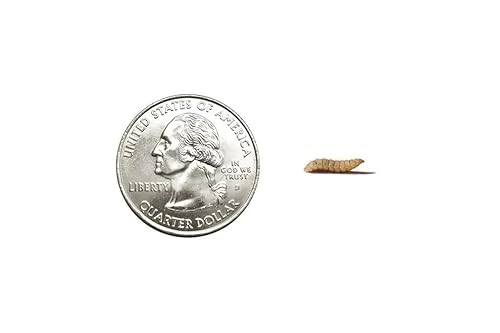
Black Soldier Fly Larvae (BSFL / Nutrigrubs)
Black soldier fly larvae — sold as Nutrigrubs, CalciWorms, or PhoenixWorms depending on the brand — hold a unique nutritional position among feeder insects: they are the **only commonly available feeder with a calcium-to-phosphorus ratio above 1:1**, typically measuring around **1.5:1 calcium to phosphorus**. This is biologically remarkable. Every other common feeder insect (crickets, dubias, mealworms) has an inverted Ca:P ratio that pulls calcium out of the chameleon's skeletal reserves — requiring calcium supplementation at every meal to compensate. BSFL require no calcium dusting, which makes them particularly valuable for female veiled chameleons actively producing eggs, where calcium depletion is a constant concern. Their slow, wriggling movement also triggers a strong feeding response from chameleons.
Hornworms (Live)
Hornworms (Manduca sexta) are the hydration tool in the veiled chameleon feeder toolkit. At **85% moisture content**, they are among the most water-dense feeder insects available — a meaningful advantage for a species that drinks from water droplets on leaves and rarely drinks from standing water. Dehydrated chameleons often refuse to eat before they show visible dehydration symptoms, making hornworms a preventive hydration strategy. Chameleons love them: the bright green color, wriggling movement, and size make hornworms one of the most stimulating and readily accepted feeders available. Limit to **2–3 per week** for adults — their high moisture and relatively low protein-to-calorie ratio means they should be treats, not staples.
Frequently Asked Questions
For adult veiled chameleons, 6–10 medium crickets every other day is the standard protocol. For females, keep it to 5–6 every other day to prevent mega-clutch egg production. Juveniles under 6 months eat daily, starting with pinhead crickets or small BSFL. Always remove uneaten crickets within 30 minutes — they will bite a resting chameleon.
References & Sources
Related Articles

Best Panther Chameleon Food: Top Feeders & Diet Tips
Discover the best panther chameleon food options, from dubia roaches to hornworms, with feeding schedules and supplement tips for a thriving chameleon.

Best Veiled Chameleon Heating and Lighting Setup (2026): UVB, Basking & Thermostats
Veiled chameleons need Ferguson Zone 3–4 UVB, an 85–95°F basking spot, and a real nighttime drop to 65–72°F. Wrong lighting causes MBD. Wrong heat at night causes chronic stress. Here are the 6 best products that get it right.

6 Best Veiled Chameleon Supplements (2026): Calcium, Multivitamins & Egg-Laying Support
Veiled chameleons are the only commonly kept chameleon species that eat both insects AND plants — and females lay eggs even without a mate. Both factors create unique calcium demands that generic reptile supplement advice doesn't address. We ranked the 6 best veiled chameleon supplements for 2026.