6 Best Tegu Substrates for Burrowing & Humidity (2026)
Tegus need 12-24 inches of substrate to burrow — most setups fall far short. Here are the 6 best options ranked for depth, humidity, and bioactive compatibility.


This article contains affiliate links. If you make a purchase through these links, we may earn a small commission at no extra cost to you. See our affiliate disclosure for details.
We recommend 6 picks here. Our top choice is the The BioDude Terra Firma — check price and availability below.
How we choose: we compare published specifications against the care requirements in veterinary and species-care literature, and weigh those against what long-time keepers report. We do not test products ourselves and we do not restate Amazon star ratings. The 5 sources behind this article are listed at the bottom.
Quick Comparison
- Type
- Bioactive Pre-Mix
- Burrowing Depth
- Excellent
- Humidity Retention
- Excellent
- Bioactive Compatible
- Yes
- Best For
- Bioactive setups
- Price Range
- $$$$
- Type
- Coconut Fiber
- Burrowing Depth
- Good
- Humidity Retention
- Excellent
- Bioactive Compatible
- With amendments
- Best For
- Budget humidity
- Price Range
- $
- Type
- Single Substrate (Natural)
- Burrowing Depth
- Excellent
- Humidity Retention
- Excellent
- Bioactive Compatible
- Yes
- Best For
- Single-substrate simplicity
- Price Range
- $
- Type
- Compressed Block (Coconut)
- Burrowing Depth
- Good
- Humidity Retention
- Excellent
- Bioactive Compatible
- With amendments
- Best For
- Large enclosures
- Price Range
- $$
- Type
- DIY Soil/Sand Blend
- Burrowing Depth
- Excellent
- Humidity Retention
- Good
- Bioactive Compatible
- Yes
- Best For
- Custom control
- Price Range
- $
- Type
- Pre-Mixed Natural
- Burrowing Depth
- Good
- Humidity Retention
- Good
- Bioactive Compatible
- Yes
- Best For
- Convenience
- Price Range
- $$
Prices are estimates only. Actual prices on Amazon may vary.
Tegus are not small lizards. A full-grown Argentine black and white tegu (Salvator merianae) reaches 4-5 feet and weighs 8-15 pounds. They dig deep burrows, regulate their own temperature through substrate contact, and spend significant time underground — especially in winter when they brumate for weeks at a time.
That means substrate is not optional. It is one of the most critical elements of tegu husbandry. The wrong substrate, or not enough of it, leads to stress, inadequate thermoregulation, failed brumation, and long-term health problems.
This guide ranks the 6 best tegu substrate options based on humidity retention, burrow stability, bioactive compatibility, and cost-per-volume for large enclosures.
For the full setup picture, see our bearded dragon substrate guide and ball python substrate guide for substrate depth comparisons across large reptile species.
Why Depth Matters More Than Type
Most substrate guides for tegus focus on what to use. This guide starts with how much — because inadequate depth is the most common substrate mistake tegu keepers make.
According to Reptifiles' Argentine tegu care guide, tegus need a minimum of 12 inches (30 cm) of substrate in their enclosure. For tegus that exhibit strong burrowing behavior, 18-24 inches is better. This is not about enrichment — it's physiological.
Tegus use substrate depth to:
- Thermoregulate — deeper substrate stays cooler than the surface, giving tegus a thermal gradient they can navigate vertically
- Brumation — tegus naturally brumate underground for 3-5 months. Without adequate depth, they cannot do this properly, which stresses their metabolism and immune system
- Humidity refuges — deep substrate retains moisture at lower levels even when the surface dries out, giving tegus access to humid microclimates
- Psychological security — tegus that can fully submerge themselves show dramatically reduced stress responses
If your enclosure currently has 2-4 inches of substrate, your tegu is missing all of this.
Substrate Calculator
Use this formula to calculate how much substrate you need:
Volume (liters) = Length (cm) × Width (cm) × Depth (cm) ÷ 1000
For a standard 8×4 foot (244×122 cm) enclosure at 12 inches (30 cm) depth:
244 × 122 × 30 ÷ 1000 = 893 liters of substrate
That's a lot. This is why DIY topsoil/sand mixes and bulk garden center purchases are the only realistic options for cost-conscious keepers. A pre-made reptile substrate at 10 liters per bag would require 90 bags to fill that enclosure at proper depth.
Detailed Reviews
1. The BioDude Terra Firma
Best Bioactive
The BioDude Terra Firma
Pros
- •Pre-formulated for large terrestrial lizards — no mixing required
- •Excellent burrow stability — tunnels hold without collapse
- •Supports robust cleanup crew colonies for self-cleaning setup
- •Retains humidity at 60-80% without becoming waterlogged
Cons
- •Most expensive per bag — large enclosures need many bags
- •Online-only — not available in pet stores
- •Heavy when wet — expect significant enclosure weight
Bottom Line
Terra Firma is the gold standard bioactive substrate for large terrestrial lizards, including tegus. It's a pre-mixed blend of organic topsoil, clay, sand, and organic matter — specifically designed to support cleanup crews while holding the high humidity (60-80%) that tegus require. The formula packs tightly enough that a tegu can dig and maintain burrows without collapses. For a 8x4 enclosure at 12 inches of depth, you'll need multiple bags — budget accordingly. The Bio Dude also recommends pairing Terra Firma with their CUC (cleanup crew) kit: powder blue isopods and temperate springtails. If you want a turn-key bioactive setup that requires minimal maintenance long-term, Terra Firma is the single best substrate on this list.
2. Zoo Med Eco Earth Coconut Fiber
Best Budget
Zoo Med Eco Earth Coconut Fiber
Pros
- •Cheapest humidity-retaining substrate option
- •Available at most pet stores and online
- •Expands to fill large enclosures efficiently
- •Fully biodegradable and safe if accidentally ingested
Cons
- •Too fluffy alone — does not hold burrows without topsoil amendment
- •Pure coconut fiber can dry out faster than topsoil mixes
- •Brick expansion is inconsistent — some bricks yield less volume
Bottom Line
Eco Earth is compressed coconut fiber that expands dramatically when hydrated. It's one of the cheapest humidity-retaining substrates on the market and widely available at any pet store. Coconut fiber alone is too light and fibrous to hold burrows well, so it works best as a component in a mixed substrate (blended 50/50 with organic topsoil). It can also be used alone if your priority is budget and humidity over burrowing depth. A single brick expands to roughly 7-8 liters — for a large tegu enclosure at 12+ inches, buy in bulk packs. Eco Earth is also fully bioactive compatible when mixed with topsoil and seeded with isopods.
3. Cypress Mulch
Best Single Substrate
Cypress Mulch
Pros
- •Excellent humidity retention — holds 60-80% with minimal misting
- •Better burrow stability than coconut fiber alone
- •Naturally mold-resistant compared to other organic substrates
- •Cheap in bulk from garden centers — far more economical than reptile brands
Cons
- •Bulk garden bags must be checked for pesticides and fertilizers
- •Coarser texture than topsoil mixes — some tegus prefer finer substrate
- •Not ideal as a bioactive substrate without topsoil amendment
Bottom Line
Cypress mulch is the single best standalone substrate for tegus on this list. It outperforms coconut fiber in burrow stability, resists mold better than most organic substrates, and holds humidity at the 60-80% range tegus require with minimal daily misting. The texture is coarse enough to support digging but breaks down slowly, meaning you get more mileage per bag than finer substrates. Buy natural cypress mulch from a garden center (bulk bags are far cheaper than reptile-branded versions) and check that it contains no added dyes, fertilizers, or pesticide treatments. The Reptifiles tegu care guide specifically recommends cypress mulch as one of the best single-substrate options. At 12-24 inches of depth in a large enclosure, bulk garden bags are the only cost-effective option.
4. ReptiChip Premium Coconut Substrate
Best Compressed Block
ReptiChip Premium Coconut Substrate
Pros
- •72-liter expansion per block — most economical for large enclosures
- •Coarser chip texture supports better burrow structure than fine coir
- •Low odor and mold-resistant
- •Widely available and popular among large lizard keepers
Cons
- •Still too loose alone for deep burrows — needs topsoil amendment
- •Chip texture can be rough on a tegu's snout during active digging
- •No added nutrients — not bioactive-ready without topsoil and cleanup crew
Bottom Line
ReptiChip is a compressed coconut chip substrate that expands to 72 liters per block — far more volume than standard Eco Earth bricks. This makes it the most cost-effective option for filling the deep substrate layers that tegus require (12-24 inches in a large enclosure). The chip texture is coarser than coir fiber, providing better structural support for burrows when mixed with topsoil. ReptiChip holds humidity well and is popular among large lizard keepers for its expansion ratio and clean, low-odor performance. Use it as the primary component in a DIY mix — combine with 30-40% organic topsoil for best results in a tegu setup.
5. DIY Organic Topsoil + Play Sand Mix
Best DIY Blend
DIY Organic Topsoil + Play Sand Mix
Pros
- •Cheapest option for large-enclosure fills — $30-50 for a full 8x4 setup
- •Custom ratio control — adjust sand content for your specific tegu's digging style
- •Fully bioactive compatible — excellent base for isopod colonies
- •Widely available at hardware and garden stores
Cons
- •Requires sourcing and mixing — more prep work than pre-made options
- •Must verify topsoil is free of fertilizers and perlite before use
- •Heavier than other substrates — significant enclosure weight at depth
Bottom Line
The best custom substrate blend for tegus is 60% organic topsoil and 40% play sand by volume. This ratio creates a dense, burrowing-friendly substrate that closely mimics the humid forest floor and pampas grassland terrain that Argentine and Colombian tegus inhabit in the wild. The topsoil provides organic matter for cleanup crews and humidity retention; the sand provides drainage and structural stability for burrow walls. Total material cost for a large enclosure (8x4 at 12 inches deep) is roughly $30-50 using bags from a hardware or garden store — a fraction of the cost of pre-made reptile substrates. The key is sourcing organic topsoil with no added fertilizers, perlite, or vermiculite (read the label). Play sand should be washed and screened — not construction-grade.
6. Zoo Med ReptiSoil
Best Ready-Mix
Zoo Med ReptiSoil
Pros
- •Available at most pet stores — easy to source quickly
- •Pre-mixed — no preparation needed
- •Good humidity retention from peat moss content
- •Works well as a top layer over a cheaper bulk base substrate
Cons
- •Most expensive per liter of substrate volume
- •Higher peat content can become compacted and hydrophobic when dry
- •Not specifically formulated for large burrowing lizards
Bottom Line
ReptiSoil is a pre-mixed natural substrate combining peat moss, soil, sand, and carbon. It's the easiest ready-made option available at most pet stores — no measuring or mixing required. While it doesn't match the bioactive performance of Terra Firma or the burrowing depth of a DIY topsoil/sand mix, it's a reliable stepping stone for keepers transitioning from bark chips or paper towels to a proper naturalistic setup. The peat moss content holds humidity well, and it supports light burrowing for hatchlings or young tegus. For adult tegus that need 12-24 inches of substrate depth, ReptiSoil's cost per volume makes it less practical than DIY options — but it works well as a top layer over a cheaper base substrate.
Humidity Requirements: The 60-80% Rule
Argentine tegus are from humid forest edges and pampas grasslands in South America. They need 60-80% ambient humidity throughout the enclosure, with higher humidity at the substrate surface and in burrow interiors.
The Bio Dude's Argentine tegu care sheet notes that low humidity is one of the most common causes of retained shed, respiratory infections, and poor skin condition in captive tegus.
Your substrate needs to:
- Hold moisture without becoming waterlogged
- Maintain humidity between misting sessions
- Allow surface drying while retaining deeper moisture
Cypress mulch, coconut fiber, organic topsoil, and bioactive mixes all meet this requirement. Pure sand, bark chips, and reptile carpet do not.
Substrate Types Compared
Bioactive Mixes
Bioactive substrates combine organic soil components with live cleanup crews — isopods and springtails that consume waste, shed skin, and uneaten food. For large lizards like tegus that produce significant waste, a functional bioactive setup dramatically reduces cleaning labor.
The BioDude Terra Firma is the most widely used pre-made bioactive substrate for tegus. It's formulated for large terrestrial lizards and supports robust isopod colonies. The trade-off is cost — at the volumes needed for a tegu enclosure, the initial investment is significant. Long-term, the reduced maintenance and substrate replacement cost offsets this.
A DIY bioactive mix (60% organic topsoil + 30% coconut fiber/cypress + 10% play sand) achieves similar results at a fraction of the cost. Seed it with powder blue isopods and temperate springtails from a cleanup crew supplier.
Single-Substrate Options
Cypress mulch stands out as the best single-substrate option. It holds humidity, resists mold, and provides adequate burrow stability when packed at sufficient depth. It's also cheap in bulk from garden centers.
Coconut fiber (Eco Earth, ReptiChip) is excellent for humidity but too lightweight to hold burrows on its own. Always mix with topsoil at a minimum 50/50 ratio for tegu use. ReptiChip is the most economical compressed block option for large fills.
DIY Blends
The 60% organic topsoil + 40% play sand blend is the single best substrate for most tegu keepers. It costs a fraction of pre-made options, matches the physical properties of tegus' natural habitat, and is fully bioactive compatible. See the full recipe in the DIY section below.
How Much Substrate Do You Need? (Size Guide)
| Enclosure Size | Min Depth | Volume Needed | DIY Mix Cost |
|---|---|---|---|
| 6×3 ft (183×91 cm) | 12 in (30 cm) | ~500 liters | ~$25 |
| 8×4 ft (244×122 cm) | 12 in (30 cm) | ~893 liters | ~$40 |
| 8×4 ft (244×122 cm) | 18 in (46 cm) | ~1,370 liters | ~$60 |
| 10×5 ft (305×152 cm) | 12 in (30 cm) | ~1,395 liters | ~$65 |
| 10×5 ft (305×152 cm) | 24 in (61 cm) | ~2,791 liters | ~$120 |
DIY cost estimates assume bulk topsoil and play sand from a hardware store. Pre-made reptile substrate at the same volumes would cost 10-20x more.
Substrates to Avoid
Not all substrates sold in reptile stores are safe for tegus. Avoid these:
Cedar and Pine Shavings
Cedar and pine contain aromatic oils (phenols) that are toxic to reptiles. These volatile compounds damage the respiratory system and liver with continuous exposure. Never use any cedar or pine product in a tegu enclosure — this applies to all wood-based substrates, not just traditional wood chips.
Pure Sand
Pure sand has no humidity retention, provides poor burrow stability, and presents an impaction risk if a tegu ingests significant amounts while feeding. Sand is excellent as a component (30-40% of a mix) but dangerous as a standalone substrate. Always blend with organic topsoil.
Reptile Carpet
Reptile carpet is a holdover from the early 2000s and has no place in a modern tegu setup. Tegu nails get caught in the fibers, potentially tearing nails out of their sheaths. Carpet harbors bacteria between fibers that washing cannot eliminate. It provides zero humidity retention and zero burrowing opportunity. If you're using carpet, switch to any substrate on this list.
Bark Chips (Large)
Large bark chips (orchid bark, etc.) are too coarse for tegus. They don't hold humidity well, don't pack for burrowing, and create an uneven walking surface. Fine coconut chips (like ReptiChip) are acceptable, but large bark chunks should be avoided.
Newspaper and Paper Towels
Acceptable for quarantine setups and hatchlings only. Paper has zero humidity retention and provides no burrowing opportunity — both critical for tegu wellbeing. Upgrade to a proper substrate as soon as your tegu is eating regularly and showing no signs of illness.
DIY Tegu Substrate: The Best Budget Mix
For keepers filling a large enclosure, DIY is the only cost-effective path to proper substrate depth. Here is the exact blend recommended by Reptifiles and the herpetology community:
Recipe: 60% organic topsoil + 40% play sand
- Source organic topsoil from a hardware or garden store — read the label. No perlite, no fertilizers, no wetting agents. Pure black topsoil is what you want.
- Source play sand — washed and screened, not construction sand. Hardware store play sand works perfectly.
- Mix thoroughly in a wheelbarrow or large bin. Aim for a consistent blend with no large clumps.
- Fill your enclosure in layers, packing each layer firmly. The denser the pack, the better the burrow stability.
- Mist thoroughly and allow 24-48 hours to settle before adding your tegu.
Optional improvements:
- Add 10% cypress mulch to the mix for improved mold resistance
- Add 5% organic leaf litter (oak leaves, magnolia) to feed isopod colonies
- Seed with powder blue isopods + temperate springtails for a bioactive setup
Total cost for an 8×4 enclosure at 12 inches: approximately $40-50 from a hardware store.
Substrate Maintenance Schedule
Non-Bioactive Setup
- Daily: Spot-clean waste, uneaten food, and shed skin
- Weekly: Mist the substrate surface if humidity drops below 60%. Test with a hygrometer.
- Monthly: Top off substrate depth as it compacts (add 1-2 inches)
- Every 6-12 months: Full substrate replacement. Remove everything, clean the enclosure, refill.
Bioactive Setup
- Daily: Spot-check — remove any uneaten prey items that could harm isopods
- Weekly: Check humidity (60-80%). Mist surface if below target.
- Monthly: Add leaf litter and/or organic matter to feed cleanup crew
- Annually: Top off substrate depth. Full replacement is rarely needed if the cleanup crew is thriving.
A functional bioactive setup with a healthy isopod colony eliminates the 6-12 month full replacement cycle entirely. The isopods process waste continuously, keeping the substrate healthy indefinitely with only organic matter top-offs.
Comparing Substrate for Argentine vs. Colombian Tegus
Argentine tegus (Salvator merianae) and Colombian tegus (Tupinambis teguixin) have similar substrate needs — both require deep, humid substrate for burrowing. The key difference is brumation behavior:
- Argentine tegus brumate heavily (October-March in the Northern Hemisphere). Deep substrate is especially critical — they need to fully submerge for months at a time.
- Colombian tegus may brumate less predictably or skip brumation in stable captive conditions. Substrate requirements remain the same, but the brumation depth urgency is lower.
For Argentine tegus, treat the 12-inch minimum as an absolute floor. 18-24 inches is the target for adults. For Colombian tegus, 12 inches is adequate for most individuals.
For more large reptile comparisons, see our guides on corn snake substrate and ball python substrate.
Setting Up a Bioactive Tegu Enclosure
A bioactive tegu setup reduces cleaning to near-zero once established. Here is the setup process:
Step 1 — Substrate layer Fill 12-24 inches of your DIY 60/40 topsoil/sand mix or BioDude Terra Firma. Pack firmly in layers.
Step 2 — Leaf litter layer Add 1-2 inches of organic leaf litter on the surface. Oak and magnolia leaves work well. This is the primary food source for your cleanup crew.
Step 3 — Seed the cleanup crew Add 50-100 powder blue isopods and a culture of temperate springtails. These numbers sound large, but tegu waste output is high — you need a robust colony to keep up.
Step 4 — Establish before adding the tegu Let the enclosure run for 4-6 weeks before introducing your tegu. The cleanup crew needs time to establish colonies before facing a constant waste load.
Step 5 — Ongoing Mist weekly to maintain 60-80% humidity. Add leaf litter monthly. The isopods do the rest.
Reptifiles' tegu enclosure page notes that live plants can be added to a bioactive tegu enclosure with careful selection — choose hardy species that can handle a large lizard occasionally walking over them (pothos, sansevieria, and ZZ plants are popular).
Our Final Verdict
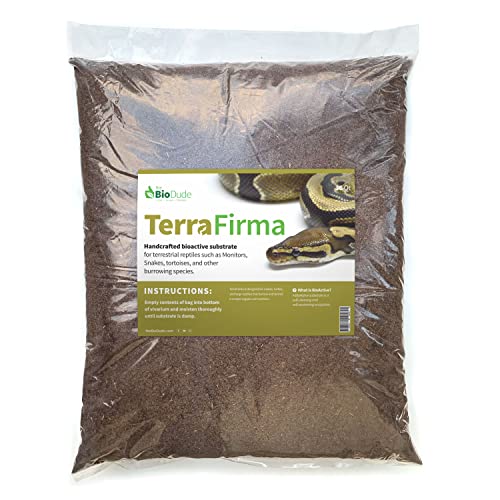
The BioDude Terra Firma
Terra Firma is the gold standard bioactive substrate for large terrestrial lizards, including tegus. It's a pre-mixed blend of organic topsoil, clay, sand, and organic matter — specifically designed to support cleanup crews while holding the high humidity (60-80%) that tegus require. The formula packs tightly enough that a tegu can dig and maintain burrows without collapses. For a 8x4 enclosure at 12 inches of depth, you'll need multiple bags — budget accordingly. The Bio Dude also recommends pairing Terra Firma with their CUC (cleanup crew) kit: powder blue isopods and temperate springtails. If you want a turn-key bioactive setup that requires minimal maintenance long-term, Terra Firma is the single best substrate on this list.

Zoo Med Eco Earth Coconut Fiber
Eco Earth is compressed coconut fiber that expands dramatically when hydrated. It's one of the cheapest humidity-retaining substrates on the market and widely available at any pet store. Coconut fiber alone is too light and fibrous to hold burrows well, so it works best as a component in a mixed substrate (blended 50/50 with organic topsoil). It can also be used alone if your priority is budget and humidity over burrowing depth. A single brick expands to roughly 7-8 liters — for a large tegu enclosure at 12+ inches, buy in bulk packs. Eco Earth is also fully bioactive compatible when mixed with topsoil and seeded with isopods.

Cypress Mulch
Cypress mulch is the single best standalone substrate for tegus on this list. It outperforms coconut fiber in burrow stability, resists mold better than most organic substrates, and holds humidity at the 60-80% range tegus require with minimal daily misting. The texture is coarse enough to support digging but breaks down slowly, meaning you get more mileage per bag than finer substrates. Buy natural cypress mulch from a garden center (bulk bags are far cheaper than reptile-branded versions) and check that it contains no added dyes, fertilizers, or pesticide treatments. The Reptifiles tegu care guide specifically recommends cypress mulch as one of the best single-substrate options. At 12-24 inches of depth in a large enclosure, bulk garden bags are the only cost-effective option.
Frequently Asked Questions
Minimum 12 inches (30 cm) for adults. Tegus need depth for thermoregulation, brumation, and psychological security. For tegus that burrow actively, 18-24 inches is the target. Anything shallower limits natural behavior significantly.
References & Sources
- https://www.thebiodude.com/blogs/lizard-caresheets/argentine-tegu-care-sheet-and-bioactive-maintenance
- https://reptifiles.com/colombian-argentine-tegu-care/tegu-substrate/
- https://reptifiles.com/colombian-argentine-tegu-care/shopping-list/
- https://reptifiles.com/colombian-argentine-tegu-care/tegu-enclosure-decor/
- https://reptifiles.com/colombian-argentine-tegu-care/tegu-humidity-temperatures/
Related Articles

Best Substrate for Aquatic Turtles: Sand or Gravel?
Choosing the best substrate for aquatic turtles affects water quality, health, and behavior. Here's what actually works — and what to avoid.

Best Substrate for Box Turtle: Create a Healthy Habitat
Discover the best substrate for your box turtle to ensure a healthy and stimulating environment. From natural to DIY options, we've got you covered.

Best Substrate for Dart Frogs: Top Picks & Tips
Discover the best substrates for dart frogs, including DIY and commercial options, to create a thriving bioactive terrarium.