Best Starter Reptiles: 5 Top Picks for Beginners
Looking for the best starter reptiles? Our expert guide covers 5 easy-to-care-for lizards and snakes perfect for beginners. Find your first scaly friend!


This article contains affiliate links. If you make a purchase through these links, we may earn a small commission at no extra cost to you. See our affiliate disclosure for details.
We recommend 4 picks here. Our top choice is the Govee Digital Thermometer/Hygrometer — check price and availability below.
How we choose: we compare published specifications against the care requirements in veterinary and species-care literature, and weigh those against what long-time keepers report. We do not test products ourselves and we do not restate Amazon star ratings. The 6 sources behind this article are listed at the bottom.
Quick Comparison
- Product Type
- Digital Thermometer/Hygrometer
- Monitoring/Control
- Continuous Environmental Data
- Primary Safety Aspect
- Prevents incorrect habitat parameters
- Approximate Price Range
- $10-25
- Product Type
- Infrared Temperature Gun
- Monitoring/Control
- Instant Surface Spot-check
- Primary Safety Aspect
- Prevents thermal burns from basking spots
- Approximate Price Range
- $15-30
- Product Type
- Digital Thermostat
- Monitoring/Control
- Automatic Heat Regulation
- Primary Safety Aspect
- Prevents heat source overheating
- Approximate Price Range
- $20-40
- Product Type
- T5 UVB Lighting Kit
- Monitoring/Control
- Timed UVB Emission
- Primary Safety Aspect
- Supports bone health via D3 synthesis
- Approximate Price Range
- $50-80
Prices are estimates only. Actual prices on Amazon may vary.
Bringing home your first reptile is an incredibly exciting journey. The world of scaly companions is vast, filled with amazing diversity. But with so many choices, it's easy to feel overwhelmed. What are the best starter reptiles for someone new to the hobby? The answer isn't just about what's popular; it's about finding a pet whose needs you can confidently meet.
As a herpetological care specialist, I've seen countless new keepers succeed—and struggle. The key to success is choosing an animal that is hardy, has a calm temperament, and has relatively straightforward care requirements. A forgiving species gives you room to learn and grow as a keeper without compromising the animal's health.
This guide will walk you through the top 5 best starter reptiles, breaking down why they make great first-time pets. We'll cover their basic needs, temperament, and what you can expect from life with them. We're focusing on reptiles known for their resilience and manageable care, setting you and your new pet up for a long and happy relationship.
What Makes a Reptile Good for Beginners?
Before we dive into our top picks, let's define what we're looking for in a "starter" reptile. It’s not about being boring or basic; it’s about being a good match for a new keeper's skill level. You want an animal that is more of a gentle learning curve than a vertical climb.
Here are the key traits of the best starter reptiles:
- Docile Temperament: A calm, slow-to-stress animal is much easier and more enjoyable to handle and interact with. You want a pet that is tolerant of beginner mistakes and won't see you as a threat.
- Manageable Size: A smaller reptile requires a smaller, more manageable enclosure. While a six-foot iguana might look cool, its housing and feeding needs are immense and not suitable for a beginner.
- Simple Housing Requirements: The ideal starter reptile doesn't need a highly complex, computer-controlled environment. Their temperature and humidity needs should be relatively easy to maintain in a typical home setting.
- Straightforward Diet: Some reptiles have very specific dietary needs. For a first pet, it’s best to choose one that eats readily available foods, like standard feeder insects or commercially prepared diets.
- Hardiness: A hardy species is one that is generally healthy and resilient. They are less susceptible to stress-related illnesses, which can be a safety net as you learn the finer points of reptile husbandry.
Choosing a reptile that checks these boxes will make your entry into the hobby rewarding rather than stressful. It's all about finding the right fit for your lifestyle and experience level.
5 Traits of Beginner-Friendly Reptiles
What you need to know
Docile Temperament — Calm, slow-to-stress animals that tolerate beginner mistakes
Manageable Size — Smaller reptiles require less complex enclosures and easier handling
Simple Housing Requirements — Should not need computer-controlled environments
Straightforward Diet — Readily available foods like standard feeder insects or powdered diets
Hardiness — Generally healthy and resilient, less susceptible to stress-related illnesses
Leopard Gecko vs Bearded Dragon
Side-by-side comparison
| Feature | Leopard Gecko | Bearded Dragon |
|---|---|---|
| Enclosure Size (Adult) | ★20-gallon long aquarium | 4'×2'×2' (120-gallon minimum) |
| Temperature Setup | ★Gradient 75–90°F, basic heating mat | 100–110°F basking spot + ambient |
| UVB Lighting | ★Not strictly required (beneficial low-level) | Critical: high-output T5 tube required |
| Diet | Insects only (crickets, roaches, mealworms) | Mixed insects + fresh vegetables (collards, mustard greens) |
| Activity Viewing | Nocturnal/crepuscular (dawn/dusk active) | ★Diurnal (active throughout day) |
| Interaction & Personality | Calm, easy to handle, lower engagement | ★Highly interactive, curious, entertaining behavior |
Our Take: Leopard geckos win on simplicity and minimal setup; bearded dragons reward more investment with personality and daytime engagement.
Detailed Reviews
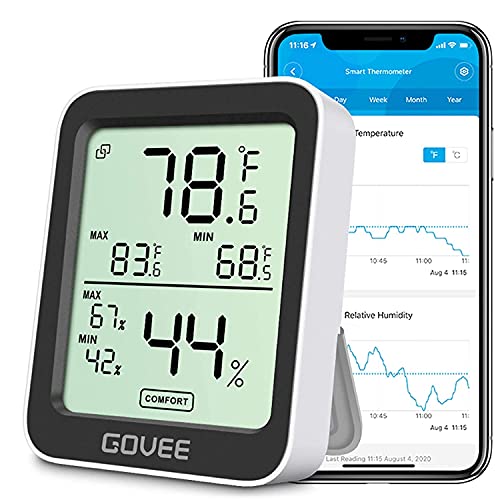
1. Govee Digital Thermometer/Hygrometer
Best Value
Govee Digital Thermometer/Hygrometer
Pros
- •Provides accurate, real-time temperature and humidity readings.
- •More reliable and precise than analog alternatives.
- •Helps ensure proper environmental conditions for reptile well-being.
- •Often includes minimum/maximum record-keeping functions.
Cons
- •Requires battery replacement (common for digital devices).
- •Probe placement is critical for accurate readings.
- •May have a limited range for external display.
Bottom Line
Digital thermometer/hygrometers are crucial for maintaining optimal environmental conditions for reptile health. They provide precise, real-time data, enabling keepers to quickly adjust temperature and humidity levels.
2. Etekcity Infrared Temperature Gun
Editor's Choice
Etekcity Infrared Temperature Gun
Pros
- •Provides instant, non-contact surface temperature readings.
- •Ensures precise basking spot temperatures for proper thermoregulation.
- •Prevents accidental burns from overheated surfaces.
- •Versatile for checking various surfaces within the enclosure.
Cons
- •Measures surface temperature, not ambient air temperature.
- •Requires manual checks, not continuous monitoring.
- •Accuracy can be affected by distance or surface type.
Bottom Line
An infrared temperature gun offers instant and highly accurate surface temperature measurements. It is indispensable for verifying basking spot temperatures and preventing thermal burns.
3. BN-LINK Digital Heat Mat Thermostat
Best Overall
BN-LINK Digital Heat Mat Thermostat
Pros
- •Prevents overheating of heat sources, crucial for reptile safety.
- •Maintains stable and consistent temperatures automatically.
- •Reduces risk of thermal burns and environmental fluctuations.
- •Often features a temperature probe for precise control.
Cons
- •Requires careful probe placement for optimal function.
- •Primarily for under-tank heaters, not general ambient heating.
- •Adds another electrical component to the setup.
Bottom Line
A digital heat mat thermostat is a vital safety component, automatically regulating heat source output. It prevents overheating, guarding against burns, and ensures consistent, safe temperatures within the enclosure.
4. Arcadia ShadeDweller ProT5 UVB Kit
Premium Pick
Arcadia ShadeDweller ProT5 UVB Kit
Pros
- •Provides appropriate low-level UVB for crepuscular species.
- •Supports vitamin D3 synthesis and overall bone health.
- •Enhances natural behaviors and photo-period regulation.
- •Arcadia is a highly reputable brand known for quality and scientific accuracy.
Cons
- •Specific to crepuscular species; not ideal for high-UVB demanding reptiles.
- •Bulb requires annual replacement for optimal UVB output.
- •Higher initial cost compared to basic lighting solutions.
Bottom Line
The Arcadia ShadeDweller ProT5 UVB Kit delivers essential low-level UVB for crepuscular reptiles, supporting bone health and natural behaviors. It's a high-quality system from a brand trusted for its scientific approach to reptile lighting.
Top 3 Beginner Lizards
Lizards are often what people picture when they think of a pet reptile. Their expressive faces and dynamic behaviors make them fascinating to watch. Here are our picks for the Best Lizards for Beginners: Top 5 Easy Pet Reptiles.
1. Leopard Gecko (Eublepharis macularius)
The leopard gecko is arguably the quintessential starter reptile, and for good reason. They've been popular in the pet trade for decades, and their gentle nature and easy care have won over millions of keepers.
Why They're Great for Beginners: Leopard geckos are small, calm, and don't require complicated lighting. They are nocturnal (more accurately, crepuscular), meaning they are most active at dawn and dusk, so they don't have the intense UVB lighting needs of many other lizards. Their diet is simple: a variety of gut-loaded insects like dubia roaches, crickets, and mealworms.
Habitat & Care: A 20-gallon long aquarium is a great starting size for a single adult. They need a temperature gradient with a warm side (around 88-92°F) and a cool side (room temperature). This is easily achieved with an [under-tank heating mat](https://www.amazon.com/dp/B08C98KNWR?tag=krawlo-20 connected to a thermostat—a non-negotiable piece of equipment for safety. You'll also need at least three hides: one on the warm side, one on the cool side, and a humid hide (filled with moss) to help with shedding.
| Feature | Leopard Gecko Care |
|---|---|
| Enclosure Size (Adult) | 20-gallon (long) minimum |
| Temperature Gradient | 75°F (cool side) to 90°F (warm spot) |
| UVB Lighting | Not strictly required, but beneficial (low level) |
| Diet | Insects (crickets, dubia roaches, mealworms) |
| Temperament | Docile, calm, and easy to handle |
| Lifespan | 15-20+ years |
2. Crested Gecko (Correlophus ciliatus)
Crested geckos are another fantastic choice, especially if you're interested in a reptile that doesn't rely on live insects. These charming, eyelash-adorned geckos from New Caledonia are arboreal, meaning they love to climb.
Why They're Great for Beginners: One of the biggest draws for crested geckos is their diet. They thrive on a commercially formulated [complete powdered diet](https://www.amazon.com/dp/B0D7JTZ6MW?tag=krawlo-20 that you just mix with water. This eliminates the need to keep live insects in your home, which is a big plus for many people. They also prefer cooler, room-temperature environments, so you often don't need supplemental heating unless your house is particularly cold.
Habitat & Care: Because they are climbers, crested geckos need a vertical enclosure. An 18"x18"x24" terrarium is a good size for an adult. The tank should be filled with branches, vines, and foliage (real or artificial) to provide climbing opportunities and cover. They require higher humidity than leopard geckos, which can be maintained by misting the enclosure once or twice a day. A digital hygrometer is essential to monitor these levels.
They are known for their jumping and climbing, which makes them very entertaining to watch. While they tolerate handling, they can be a bit more skittish than a leopard gecko, so it's best to handle them in a safe, seated area.
3. Bearded Dragon (Pogona vitticeps)
Bearded dragons are full of personality and are one of the most interactive and engaging reptiles you can own. They are a bit more involved than geckos, but their rewarding nature makes them one of the best starter reptiles for those willing to invest a little more time and setup.
Why They're Great for Beginners: Beardies are known for their calm, curious, and often comical behavior. They are diurnal (active during the day), so you'll get to see them at their most active. They tolerate handling very well and often seem to enjoy interacting with their owners. Their diet is a mix of insects and vegetables, which introduces a new keeper to providing a more varied, omnivorous diet.
Habitat & Care: This is where the investment is a bit higher. A baby can start in a smaller tank, but an adult bearded dragon requires a minimum of a 4'x2'x2' (120-gallon) enclosure. They have specific heating and lighting needs that are critical for their health. You'll need a high-output UVB light (like a T5 tube) spanning much of the enclosure and a separate basking bulb to create a hot spot of 100-110°F. Without proper heat and UVB, they will develop serious health problems like Metabolic Bone Disease.
Their diet requires a balance of feeder insects, which you can learn more about in our guide to the best feeder insects for reptiles, and fresh greens like collards, mustard greens, and turnip greens. It's a bit more work, but their engaging presence is well worth the effort.
Top 2 Beginner Snakes
Snakes can be intimidating to a new keeper, but choosing the right species reveals them to be incredibly low-maintenance and fascinating pets. They eat infrequently, are generally clean, and can be very gentle. For more ideas, check out our guide to the best starter snake.
4. Corn Snake (Pantherophis guttatus)
The corn snake is the leopard gecko of the snake world. They are widely considered the number one best starter snake due to their placid nature, simple care, and manageable size. They also come in a breathtaking array of different colors and patterns (called morphs).
Why They're Great for Beginners: Corn snakes are extremely reluctant to bite and are very tolerant of handling. They are active and curious, which makes them fun to watch as they explore their enclosure. Their care is very simple: provide a secure enclosure with the right temperature gradient and feed them an appropriately sized frozen/thawed mouse every 7-14 days, depending on their age. They don't have strict humidity requirements and do well in average household humidity.
Habitat & Care: An adult corn snake is comfortable in a 40-gallon breeder tank or a similarly sized PVC enclosure. Like other reptiles, they need a temperature gradient with a warm spot of about 85°F. This is easily achieved with an under-tank heater regulated by a thermostat. Provide a couple of snug hides and a water bowl large enough for them to soak in. A secure, locking lid is a must, as snakes are notorious escape artists.
| Feature | Corn Snake Care |
|---|---|
| Enclosure Size (Adult) | 40-gallon breeder or 4'x2'x2' |
| Temperature Gradient | 75°F (cool side) to 85°F (warm spot) |
| Humidity | 40-50% (average household) |
| Diet | Frozen/thawed mice |
| Temperament | Docile, curious, and reluctant to bite |
| Lifespan | 20+ years |
5. Ball Python (Python regius)
Ball pythons are another incredibly popular snake for beginners. Their tendency to curl into a tight ball when nervous (hence the name) instead of striking is a hallmark of their shy and gentle nature. They are a bit more demanding than corn snakes regarding humidity but are still excellent starter reptiles.
Why They're Great for Beginners: Their calm, slow-moving demeanor makes them very easy to handle. They are a heavy-bodied snake but stay at a very manageable length of 3-5 feet. Like corn snakes, they come in thousands of stunning visual morphs. Once their habitat is set up correctly, their weekly or bi-weekly feeding schedule makes them a very low-maintenance pet.
Habitat & Care: Ball pythons thrive in the same 4'x2'x2' (120-gallon) enclosure size recommended for adult bearded dragons, though PVC enclosures are often better for them as they hold humidity much more effectively than glass tanks. This is key, as ball pythons need humidity levels between 55-65% to stay healthy and shed properly. Their warm spot should be around 88-92°F. Using a substrate that holds moisture, like cypress mulch or coconut fiber, can help maintain the necessary humidity.
One potential challenge for new keepers is that ball pythons can sometimes go on fasting periods, refusing food for weeks or even months. While this can be stressful for the owner, it's a normal behavior for the species and is rarely a cause for concern in a healthy, well-established snake.
A Warning About Reptile Starter Kits
(Estimates only — actual prices on Amazon may vary.)
When you're shopping for your new pet, you will inevitably see all-in-one reptile starter kits that promise everything you need for $100-$200. It's tempting to grab one and be done, but I strongly advise against it. As confirmed by experts at ReptiFiles, these kits are often poorly designed and contain inadequate or even dangerous equipment.
Common problems with these kits include:
- Inadequate Enclosure Size: They are almost always too small for an adult animal, meaning you'll have to buy a new, larger one anyway.
- Inaccurate Thermometers/Hygrometers: The analog sticker dials included are notoriously unreliable and can lead to dangerous environmental conditions.
- No Thermostat: They often include a heat mat or lamp but no thermostat to regulate it. This is a serious fire hazard and can easily lead to a fatal burn for your pet.
- Unsafe Substrates: Many kits for desert species include calcium sand, which can cause deadly impaction if ingested.
- Wrong Lighting: They might include a colored "night" bulb that disrupts the animal's day/night cycle and provides no real benefit.
It is always better, and often cheaper in the long run, to buy each piece of equipment separately. This allows you to get high-quality, safe, and appropriately sized items from the start.
Final Thoughts: Research is Your Best Friend
Choosing one of the best starter reptiles is the first step on a wonderful adventure. Whether you're drawn to the charming smile of a leopard gecko or the calm presence of a ball python, these animals can provide years of fascination and companionship.
Remember that this guide is a starting point. The single most important thing you can do before bringing any animal home is to do deep, species-specific research. Read care guides, watch videos from reputable keepers, and prepare the habitat completely before your new pet arrives. By investing in knowledge first, you ensure your new scaly friend will not just survive, but thrive under your care.
Our Final Verdict
Govee Digital Thermometer/Hygrometer
Digital thermometer/hygrometers are crucial for maintaining optimal environmental conditions for reptile health. They provide precise, real-time data, enabling keepers to quickly adjust temperature and humidity levels.

Etekcity Infrared Temperature Gun
An infrared temperature gun offers instant and highly accurate surface temperature measurements. It is indispensable for verifying basking spot temperatures and preventing thermal burns.

BN-LINK Digital Heat Mat Thermostat
A digital heat mat thermostat is a vital safety component, automatically regulating heat source output. It prevents overheating, guarding against burns, and ensures consistent, safe temperatures within the enclosure.
Frequently Asked Questions
The Leopard Gecko is often considered the best starter reptile. They are small, have a very docile temperament, are easy to handle, and have simple care requirements, especially regarding lighting and heating. Corn Snakes are another top choice, especially for those interested in snakes.
References & Sources
- https://reptifiles.com/advice-best-reptiles-for-beginners/
- https://www.zenhabitats.com/blogs/reptile-care-sheets-resources/tips-first-time-snake-and-reptile-owners-zen-habitats?srsltid=AfmBOooxgHtbLSA18cwcapzBfrQH7JgRHeYpYBw0t4p1amNXu3kAkwS_
- https://www.thesprucepets.com/best-pet-reptiles-for-beginners-1237230
- https://www.petmd.com/reptile/care/evr_rp_5-best-reptiles-and-amphibians-kids
- https://reptifiles.com/reptile-starter-kits/
- https://www.thesprucepets.com/cute-reptiles-4164697
Related Articles

Best Ackie Monitor Starter Kit for Beginners
Get the best Ackie monitor starter kit for a happy and healthy pet. Learn what to include and how to set up the perfect enclosure for your Ackie monitor.

Best Blue Tongue Skink Starter Kit: Ultimate Guide
Discover the best blue tongue skink starter kit with practical advice on enclosure, substrate, heat, lighting, and more!

Best Corn Snake Starter Kit: Everything You Need to Get Started
Find the best corn snake starter kit with our comprehensive guide, ensuring your new pet's health and happiness. Perfect for beginners!