Best Isopod Lighting: A Complete Buyer's Guide (2026)
Trying to find the best isopod lighting? Our expert guide demystifies their needs, from simple bins to bioactive setups, ensuring your cleanup crew thrives.


This article contains affiliate links. If you make a purchase through these links, we may earn a small commission at no extra cost to you. See our affiliate disclosure for details.
We recommend 2 picks here. Our top choice is the Arcadia JungleDawn LED Bar — check price and availability below.
How we choose: we compare published specifications against the care requirements in veterinary and species-care literature, and weigh those against what long-time keepers report. We do not test products ourselves and we do not restate Amazon star ratings. The 6 sources behind this article are listed at the bottom.
Quick Comparison
- Price Range
- $$$
- Output Intensity
- Intense / High
- Plant Support Level
- Demanding & demanding species
- Color Temperature
- Daylight (5000-6700K)
- Form Factor
- LED Bar
- Best For Setup Type
- Premium/complex bioactive terrariums
- Price Range
- $
- Output Intensity
- Moderate
- Plant Support Level
- Low-light to moderate-light plants
- Color Temperature
- Daylight (5000-6700K)
- Form Factor
- LED Bar/Aquarium Light
- Best For Setup Type
- Budget-friendly standard bioactive setups
Prices are estimates only. Actual prices on Amazon may vary.
If you're diving into the world of bioactive terrariums or simply culturing isopods as feeders, you've probably asked yourself: what's the deal with lighting? It’s one of the most common questions we get. You see complex lighting setups for reptiles and immediately wonder if your little land-crustaceans need the same treatment.
Let’s clear up the confusion right away. The search for the "best isopod lighting" is a bit of a trick question. The simple, direct answer is that isopods themselves don't require specialized lighting to survive. They are not like a bearded dragon that needs specific UVB rays to synthesize vitamin D3. Isopods are simple creatures of the soil and leaf litter.
However, that's not the whole story. While they don't need light for their health, the right lighting plays a huge role in their environment, especially in a bioactive setup. The lighting isn’t for them—it’s for the plants, the ecosystem, and for you, the keeper. In this guide, we'll break down exactly what you need to know to create a thriving isopod habitat, whether it's a simple plastic tub or a slice of jungle in your living room.
Do Isopods Truly Need Light?
No, isopods do not require a dedicated light source for their direct survival or health. They are detritivores, meaning they eat decaying organic matter. They spend most of their lives under leaf litter, in the soil, or tucked away in pieces of bark. They are naturally crepuscular or nocturnal, meaning they are most active during the low-light hours of dawn and dusk, or at night.
Direct, intense light is something they actively avoid. It signals danger from predators and the risk of drying out, which is fatal for them. They breathe through gill-like structures that must remain moist to function. So, blasting them with a powerful bulb isn't just unnecessary; it's stressful for them.
So why are we even talking about lighting? Because a simple lack of need doesn't mean lighting is irrelevant. The right kind of light, used correctly, is essential for two key reasons: establishing a day/night cycle and sustaining a bioactive ecosystem.
Top Isopod Lighting Picks
Quick recommendations
Intense, high-quality output that can grow almost any terrarium plant
Effective and affordable aquarium light option for bioactive setups
LED Bars vs. LED Hoods
Side-by-side comparison
| Feature | LED Bars | LED Hoods |
|---|---|---|
| Coverage | ★Long, thin fixtures with excellent even coverage | Built-in to commercial terrariums |
| Plant Support | ★Strong output for demanding plant species | Sufficient for low-light plants like Pothos or Snake Plants |
| Flexibility | ★Works with any standard rectangular tank | Limited to specific terrarium models |
Our Take: LED Bars provide superior plant growth support and flexibility for most bioactive isopod setups.
Isopod Lighting Specifications
Ideal Photoperiod
12 hours ON / 12 hours OFF
Mimics natural equatorial cycle
Purpose
Regulates feeding, breeding, and hiding behavior
Color Temperature Range
5000K–6700K (Daylight)
Ideal for photosynthesis
Automation
Use electrical timer for consistent cycle
Detailed Reviews
1. Arcadia JungleDawn LED Bar
Premium Pick
Arcadia JungleDawn LED Bar
Pros
- •Intense output promotes lush plant growth
- •High-quality full-spectrum light
- •Can support even demanding plant species
- •Long lifespan
- •Energy-efficient
Cons
- •Premium price point
Bottom Line
Premium full-spectrum LED bar with intense, high-quality output capable of growing almost any terrarium plant species, ideal for serious bioactive setups.
2. NICREW ClassicLED Aquarium Light
Best Value
NICREW ClassicLED Aquarium Light
Pros
- •Budget-friendly price
- •Effective for most bioactive setups
- •Works wonderfully according to user experience
- •Low heat output
- •Long lifespan
Cons
- •May not support the most demanding plant species
- •Less intense output than premium options
Bottom Line
Budget-friendly full-spectrum aquarium light that delivers effective coverage for most bioactive terrarium setups without excessive heat or high cost.
The Importance of a Day/Night Cycle
Every living creature on Earth has an internal clock, a circadian rhythm, that governs its behavior. Isopods are no exception. This cycle tells them when to eat, when to breed, and when to hide. Providing a consistent light cycle, or photoperiod, helps regulate these natural behaviors.
For most isopod setups, the ambient light in the room is perfectly sufficient to establish this cycle. As the sun rises and you turn on your room lights, they know it's time to lay low. When the sun sets and the room gets dark, they know it's safe to come out and forage. You don't need a special bulb for this. Simply keeping them in a room with a window provides all the signaling they need.
A 12-hour-on, 12-hour-off cycle is a great standard to aim for. It mimics a natural equatorial cycle and works well for most common species like Porcellionides pruinosus (Powder Blues) or Porcellio scaber (Dairy Cows). The easiest way to ensure this consistency is with an electrical timer, which automates the process and keeps the cycle stable even on cloudy days or when you're not home.
The Real Reason for Isopod Lighting: Bioactive Setups
Here's where lighting becomes critical. If you are keeping your isopods in a bioactive terrarium—a self-sustaining miniature ecosystem with live plants—then the lighting is no longer optional. But it's important to remember: you are lighting for the plants, not the isopods.
A healthy bioactive setup relies on a food web. The reptile (like a crested gecko) produces waste. The isopods and springtails (the "cleanup crew") break down that waste and any uneaten food into nutrients. The live plants absorb those nutrients to grow. The plants, in turn, provide shelter, maintain humidity, and oxygenate the enclosure.
Without proper lighting, the plants will wither and die. When the plants die, the foundation of your ecosystem crumbles. Nutrient levels can spike, humidity can crash, and the naturalistic cover for your animals disappears. Your isopods will suffer as their environment degrades. Therefore, the best isopod lighting is, in fact, the best plant-growing light for your specific terrarium size.
Choosing the right light ensures your plants perform photosynthesis efficiently, creating a lush, vibrant, and stable home where your cleanup crew can do its job effectively. This is the secret to a long-lasting, low-maintenance bioactive habitat.
Choosing the Best Lighting for Your Isopod Enclosure
Your lighting choice depends entirely on your goal. Are you breeding isopods in a simple tub, or creating a complex ecosystem for a pet reptile?
For Basic Isopod Bins (No Plants)
This is the simplest scenario. If you're keeping isopods in a plastic shoebox or sterilite bin for breeding purposes, you don't need any special lighting at all.
- Requirement: None.
- What to do: Just place the bin in a room that receives natural ambient light. Avoid direct sunlight, as it can quickly overheat the plastic container and kill the isopods. The natural day/night rhythm of the room is all they need. That's it. Don't overthink it!
For Bioactive Vivariums (With Live Plants)
This is where you need to invest in a quality light fixture. Your goal is to provide the full spectrum of light that plants need for photosynthesis, without generating excessive heat that could harm your isopods or dry out the substrate.
Full-Spectrum LEDs: The #1 Choice
Full-spectrum LED lights are the undisputed champion for bioactive setups. They are energy-efficient, produce very little heat, and have a long lifespan. They are designed to mimic the quality of natural sunlight, promoting lush, healthy plant growth.
You'll find them in a few common form factors:
-
LED Bars: These are long, thin fixtures that provide excellent, even coverage across the length of an enclosure. They are the go-to for standard rectangular tanks (e.g., 20-gallon long or 40-gallon breeder). The [Arcadia JungleDawn LED Bar](https://www.amazon.com/dp/B07XF7F86J?tag=krawlo-20 is a premium option known for its intense, high-quality output that can grow almost any terrarium plant. For a more budget-friendly but still effective choice, an aquarium light like the [NICREW ClassicLED](https://www.amazon.com/dp/B07F6XD2FH?tag=krawlo-20 works wonderfully.
-
LED Hoods: Many commercial terrariums come with a hood that has a built-in LED strip. These are often sufficient for low-light plants like Pothos or Snake Plants, but may not be strong enough for more demanding species.
-
Spotlight LEDs: These are single-bulb fixtures that can be used to highlight a specific area. They're great for taller enclosures where you want to focus light on a particular plant.
When choosing an LED, look for a color temperature between 5000K and 6700K. This range is often labeled as "Daylight" and provides the cool, white light that is ideal for photosynthesis.
What About UVB Lighting?
This is a common point of confusion, especially since bioactive setups are often for reptiles that do need UVB. So, will the reptile's UVB light harm the isopods?
Generally, no. The low-to-moderate levels of UVB used for most reptiles (like crested geckos or dart frogs) won't harm your isopods. In fact, some studies suggest that low levels of UVB may even be beneficial for their health and breeding. Isopods in the wild would be exposed to filtered sunlight, so a small amount of UVB is natural for them.
However, you should never add a UVB light just for the isopods. They don't require it, and a powerful UVB bulb intended for a desert reptile could cause unnecessary stress. If the primary inhabitant of your terrarium needs UVB, your isopods will be fine. If the primary inhabitant doesn't (like a tarantula or a simple isopod-only display), then a plant-focused LED is all you need. If you're looking for more info on UVB for your reptiles, our Best Reptile UVB Light guide is a great place to start.
Lighting to Avoid for Isopods
Just as important as knowing what light to use is knowing what to avoid. Using the wrong bulb can quickly crash your isopod culture.
-
High-Wattage Incandescent/Halogen Bulbs: These are designed to produce heat. While great for basking reptiles, they are a death sentence for an isopod habitat. They will rapidly dry out the substrate, and since isopods need high humidity to breathe, this is fatal. If you need to provide heat, it's far better to use an under-tank heater on the side of the enclosure or a nano ceramic heat emitter that produces no light. Check out our guide on the Best Heat Lamps For Reptiles Comparison to see why different heat sources are for different jobs.
-
"Night" or Red/Blue Bulbs: These are often marketed for viewing nocturnal animals. However, many species can still detect this light, and it can disrupt their day/night cycle. Furthermore, they offer no benefit to plants. It's better to let the enclosure be dark at night. If you want to observe your isopods, you can use a dim flashlight for brief periods.
-
24/7 Lighting: Never leave your lights on all the time. This completely eliminates the day/night cycle, causing chronic stress to your isopods. It encourages them to stay hidden, reduces breeding, and can lead to an overall decline in the colony's health. Always use a timer.
Quick Guide to Setting Up Your Lighting
Ready to get started? Here's a simple, step-by-step process.
-
Choose Your Light: For a bioactive setup, select a full-spectrum LED bar appropriate for the length of your tank. For a simple breeder bin, skip this step.
-
Position the Light: Place the light fixture directly on top of the mesh lid of your terrarium. This provides the most direct light for the plants and ensures good ventilation to prevent heat buildup.
-
Plug into a Timer: Do not skip this step! Plug the light fixture into a simple digital timer.
-
Set the Schedule: Program the timer for a 12-hour on, 12-hour off cycle. A good starting point is 8 AM to 8 PM. Consistency is key.
-
Monitor and Adjust: Observe your plants over the next few weeks. If they look leggy or are stretching towards the light, your light may be too weak or too far away. If you see white or yellow 'burn' spots on the leaves, the light might be too intense. Adjust as needed.
The Final Verdict
So, what is the best isopod lighting? The answer is beautifully simple: the lighting that's best for the live plants in their enclosure. For a majority of keepers creating bioactive habitats, a high-quality, full-spectrum LED light bar is the perfect tool for the job. It gives your plants the energy they need to thrive, which in turn creates a stable, healthy, and beautiful environment for your isopod cleanup crew.
If you're just breeding isopods in a tub, save your money. The ambient light in the room is all you need to keep their natural rhythms in sync. Focus your efforts instead on providing a deep, moist substrate, plenty of leaf litter, and a good food source. Happy isopods are the foundation of a successful bioactive terrarium, and now you know how to light their world perfectly.
Our Final Verdict
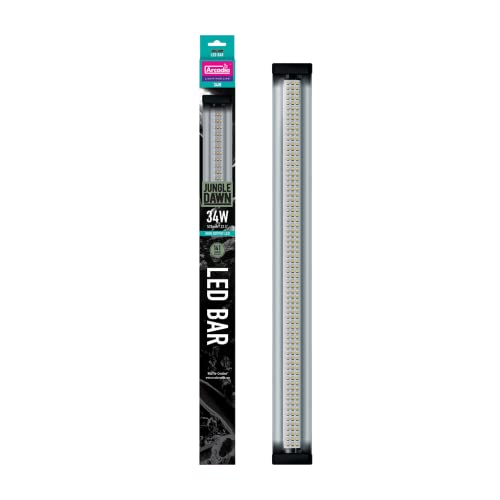
Arcadia JungleDawn LED Bar
Premium full-spectrum LED bar with intense, high-quality output capable of growing almost any terrarium plant species, ideal for serious bioactive setups.

NICREW ClassicLED Aquarium Light
Budget-friendly full-spectrum aquarium light that delivers effective coverage for most bioactive terrarium setups without excessive heat or high cost.
Frequently Asked Questions
No, isopods do not require any special lighting for their health. They are nocturnal/crepuscular and naturally avoid bright light. The ambient light in a room is enough to provide the day/night cycle they need to regulate their behavior.
References & Sources
- https://dubiaroaches.com/blogs/invert-care/isopod-care-sheet?srsltid=AfmBOopt2W-557hgKsla1bKETBl6LB8svjmRIUdxNxMhCeSto8H8CADF
- https://reptifiles.com/establishing-bioactive-clean-up-crew/
- https://reptifiles.com/how-to-build-bioactive-terrarium/
- https://reptifiles.com/blue-tongue-skink-care/blue-tongue-skink-substrate/
- https://reptifiles.com/bearded-dragon-care/
- https://reptifiles.com/fall-2019-wasatch-reptile-expo-top-10/
Related Articles

Best Isopod Heating: A Guide to Safely Warming Your Pods
Struggling with the best isopod heating setup? Discover if your isopods even need extra heat and learn the only safe way to provide it without harming your clean-up crew.

Best Jumping Spider Lighting: A Complete Care Guide
Searching for the best jumping spider lighting? Discover why a simple LED on a timer is crucial for your pet's health, happiness, and natural hunting behavior.

Best Isopod Food: Top Picks for Healthy Colonies
Discover the best isopod food for thriving colonies — from leaf litter and protein to calcium sources and commercial mixes that work for every species.