Best Hides for Bearded Dragons (2026): Caves, Logs & Corner Picks
Bearded dragons need the right hide for security, not just decor. 6 top picks reviewed for size, material, and placement — find the best hide for your beardie.


This article contains affiliate links. If you make a purchase through these links, we may earn a small commission at no extra cost to you. See our affiliate disclosure for details.
We recommend 6 picks here. Our top choice is the Exo Terra Reptile Cave Large — check price and availability below.
How we choose: we compare published specifications against the care requirements in veterinary and species-care literature, and weigh those against what long-time keepers report. We do not test products ourselves and we do not restate Amazon star ratings. The 4 sources behind this article are listed at the bottom.
Quick Comparison
- Material Type
- Dense resin
- Heat Retention
- Excellent (absorbs & radiates)
- Appropriate Size
- Large/XL for 500g+ dragons
- Price Range
- $15-30
- Sanitization Speed
- Moderate (good)
- Primary Use Case
- Daily hide with thermal needs
- Material Type
- ABS plastic
- Heat Retention
- Poor
- Appropriate Size
- Medium/Large
- Price Range
- $12-22
- Sanitization Speed
- Under 2 minutes
- Primary Use Case
- Daily use + seasonal shed
- Material Type
- Cork bark
- Heat Retention
- Moderate
- Appropriate Size
- Extra Large for adults
- Price Range
- $18-35
- Sanitization Speed
- Slow (porous material)
- Primary Use Case
- Naturalistic display builds
- Material Type
- Ceramic/clay
- Heat Retention
- Excellent (holds warmth)
- Appropriate Size
- Medium
- Price Range
- $20-40
- Sanitization Speed
- Good
- Primary Use Case
- Dry climate humidity control
- Material Type
- Artificial rock
- Heat Retention
- Good
- Appropriate Size
- Large
- Price Range
- $14-28
- Sanitization Speed
- Moderate
- Primary Use Case
- Behavioral stress relief
- Material Type
- ABS plastic
- Heat Retention
- Poor
- Appropriate Size
- Small/Medium
- Price Range
- $8-15
- Sanitization Speed
- Under 2 minutes
- Primary Use Case
- Breeder/hospital use
Prices are estimates only. Actual prices on Amazon may vary.
Bearded dragons are one of the few reptiles that don't actually need a hide to survive — in the Australian outback, Pogona vitticeps is an open-terrain basker that rarely seeks covered shelter. So why do so many captive dragons show stress behaviors when no hide is present?
The answer is enclosure context. In a glass or PVC box, a bearded dragon can see threats from every angle with no ability to retreat. Wild dragons can run. Captive dragons cannot. A hide gives them the option to disappear — even if they never use it — and that option alone reduces ambient stress behavior measurably.
Quick Comparison: Best Bearded Dragon Hides
| Product | Best For | Price | Rating |
|---|---|---|---|
| Exo Terra Reptile Cave Large | Best overall — heat-retaining cave | $15-30 | ⭐⭐⭐⭐⭐ |
| Zoo Med Reptile Shelter 3 in 1 Cave | Doubles as a shed hide | $12-22 | ⭐⭐⭐⭐ |
| Extra Large Cork Bark Flat | Naturalistic overhang, big adults | $18-35 | ⭐⭐⭐⭐ |
| Pangea Reptile Humid Hide Box with Bedding | Dry climates + persistent stuck shed | $20-40 | ⭐⭐⭐⭐ |
| Zilla Rock Lair Corner Hide | Corner-pressing dragons | $14-28 | ⭐⭐⭐⭐ |
| Lugarti Reptile Hide Box | Budget / hospital enclosures | $8-15 | ⭐⭐⭐ |
Best Bearded Dragon Hides at a Glance
Quick recommendations
Heat-retaining cave maintains warm microclimate for 30-45 minutes, large XL opening prevents avoidance
Doubles as shed hide with removable top for humid microclimate during shedding cycles
Flat overhang design matches wild shelter instinct for dragons over 500g that avoid cave entrances
Resolves corner-pressing behavior by giving dragons the enclosed, visually-blocked space they seek
Hide Sizing Essentials
What you need to know
Entrance opening must equal or exceed dragon's body girth (widest point behind front legs)
Interior floor length should accommodate dragon laying fully stretched (snout to vent)
Ceiling height should be 1.5-2x the dragon's shell-to-ground height when relaxed
Minimal interior clearance prevents exposure stress — too-large hides are ignored
Most adult bearded dragons (12-18" snout-to-vent) need Large or XL sizes
Detailed Reviews
1. Exo Terra Reptile Cave Large
Best Overall
Exo Terra Reptile Cave Large
Pros
- •Dense resin absorbs and radiates heat for 30-45 minutes
- •Large XL opening that most adult dragons accept
- •Maintains warm microclimate during retreat
- •Excellent thermal continuity
Cons
- •Higher cost than budget alternatives
Bottom Line
Dense resin cave that absorbs ambient heat and radiates it inside, maintaining a warm microclimate for 30-45 minutes. XL opening fits most adults under 500g, solving the common problem of entrances being too small.
2. Zoo Med Reptile Shelter 3 in 1 Cave
Best Value
Zoo Med Reptile Shelter 3 in 1 Cave
Pros
- •Serves two purposes (daily use and shed assist)
- •Removable top for controlled misting
- •Reduces incomplete shed on toes and tail tips
- •Excellent value for dual functionality
Cons
- •Less useful if only needing a basic daily hide
Bottom Line
Dual-purpose hide that serves as daily retreat and temporary shed assistant. Removable top allows interior misting to reduce incomplete shed without raising enclosure humidity.
3. Extra Large Cork Bark Flat
Premium Pick
Extra Large Cork Bark Flat
Pros
- •Naturalistic overhang design matches wild instincts
- •Open front eliminates entrance-avoidance issues
- •Ideal for large adults and wide-bodied dragons
- •Dragons voluntarily use it
Cons
- •Less preferred by dragons wanting enclosed caves
- •Requires proper installation or propping
Bottom Line
Flat overhang hide that mimics wild rocky ledge shelters. Dragons walk under from the open front rather than entering a tunnel, making it ideal for large adults over 500g.
4. Pangea Reptile Humid Hide Box with Bedding
Best for Dry Climates
Pangea Reptile Humid Hide Box with Bedding
Pros
- •Holds moisture for 24-48 hours
- •Top-fill port allows recharging without disturbing the dragon
- •Doesn't saturate overall enclosure humidity
- •Solves root cause of stuck shed in dry regions
Cons
- •Only necessary in specific low-humidity climates
- •Not needed for most keepers in moderate climates
Bottom Line
Ceramic hide that holds moisture for 24-48 hours with top-fill port. Specifically addresses persistent incomplete shed in desert climates where ambient humidity stays below 30%.
5. Zilla Rock Lair Corner Hide
Best for Corner-Pressing Dragons
Zilla Rock Lair Corner Hide
Pros
- •Directly addresses corner-pressing stress behavior
- •Provides proper visual blocking and enclosure
- •Fast behavioral resolution for this specific issue
Cons
- •Only beneficial for corner-pressing dragons
- •Limited utility for general purpose hiding
Bottom Line
Corner-positioned hide designed for dragons exhibiting stress-based corner-pressing behavior. Redirects the dragon's retreat instinct into an enclosed hide rather than an exposed corner.
6. Lugarti Reptile Hide Box
Budget Pick
Lugarti Reptile Hide Box
Pros
- •Fastest sanitization of any option (under 2 minutes)
- •Most budget-friendly option
- •Sterile and easy to clean
- •Practical for multi-animal operations
Cons
- •Poor heat retention
- •Low aesthetic value
- •Not suitable for permanent display
- •Lacks thermal properties of other options
Bottom Line
Functional ABS plastic hide that sanitizes in under two minutes. Designed as a tool for breeders and hospital enclosures rather than permanent display setups.
Detailed Reviews
1. Exo Terra Reptile Cave Large — Best Overall
The Exo Terra Reptile Cave Large earns the top spot because it solves the problem most keepers don't recognize until they've bought two wrong hides: thermal continuity.
When a bearded dragon retreats into a cool, lightweight hide, it loses body heat rapidly — triggering the same thermoregulation stress the hide was supposed to reduce. The Exo Terra's dense resin mass absorbs ambient heat from the basking zone and radiates it slowly inside the cave, maintaining a warm microclimate for up to 30-45 minutes after the dragon enters. For a species that can't thermoregulate passively the way a snake coiled underground can, this matters.
The XL opening is the second reason it leads this list. Community reports on MorphMarket's bearded dragon care forums consistently cite "entrance too small" as the primary reason captive dragons avoid commercial hides. The Exo Terra Reptile Cave Large eliminates that problem for most adults under 500g.
Pro Tip: Place the Exo Terra Reptile Cave Large on the cool side of the enclosure, not the basking side. Bearded dragons use hides primarily during the night window and during high-stress periods — a cool-side placement keeps the interior temperature appropriate for resting.
2. Zoo Med Reptile Shelter 3 in 1 Cave — Best Value
The Zoo Med Reptile Shelter 3 in 1 Cave is the hide to buy if you want one product to handle two jobs: daily hide and temporary shed assist.
Bearded dragons shed in segments over 1-3 weeks. During active shed, a slightly humid microclimate inside the hide — around 50-60% relative humidity — softens the outer skin layer and dramatically reduces incomplete shed on toes and tail tips. According to PetMD's bearded dragon care sheet, incomplete shed that constricts toes or tail tips is one of the leading causes of avoidable digit loss in captive bearded dragons.
The Zoo Med Reptile Shelter 3 in 1 Cave's removable top lets you mist the interior lining during shed without raising enclosure humidity overall — then pop the top back for a dry cave the rest of the month.
3. Extra Large Cork Bark Flat — Best Naturalistic Option
If your dragon ignores every cave hide you've tried, the issue may be entrance geometry, not the hide itself.
Bearded dragons in the wild shelter under rocky ledges and log overhangs — not inside caves with narrow entrances. A large Extra Large Cork Bark Flat propped at a 15-20 degree angle against the back wall creates the flat overhang shelter shape that matches their wild instinct. The dragon walks under it from the open front rather than navigating a tunnel. For adults over 500g or dragons with wide, flattened body profiles, this is often the first hide they voluntarily use.
Pro Tip: Prop the Extra Large Cork Bark Flat with a flat stone underneath one edge to create a gap of 2-3 inches — enough for the dragon to slide under without it sitting so high that the darkness breaks down. Cork bark nailed or siliconed to the back wall of a PVC enclosure holds more securely and looks cleaner than a propped arrangement.
4. Pangea Reptile Humid Hide Box with Bedding — Best for Dry Climates
Keepers in desert climates (Arizona, Nevada, Southern California) running ambient indoor humidity below 30% report significantly higher rates of incomplete shed regardless of diet and hydration. The Pangea Reptile Humid Hide Box with Bedding is the targeted fix.
The ceramic construction holds added moisture for 24-48 hours inside the hide without saturating the enclosure's desert substrate. Top-fill port means you can recharge the moisture level without moving the hide or disturbing a resting dragon. This isn't a product for every keeper — but if stuck shed on toes is a repeating problem across multiple shed cycles, the Pangea Reptile Humid Hide Box with Bedding addresses the root cause rather than the symptom.
5. Zilla Rock Lair Corner Hide — Best Corner Design
The corner-pressing behavior — where a bearded dragon flattens itself into an enclosure corner and stays there — is one of the most common stress signals in captivity and one of the most misdiagnosed.
Keepers often interpret it as the dragon "looking for a way out." In most cases, it's the dragon seeking the most enclosed, visually blocked space available. The Zilla Rock Lair Corner Hide places a properly enclosed hide in exactly that corner location, so the dragon's retreat instinct leads into the hide rather than into an exposed corner. For dragons that demonstrate this specific behavior, the Zilla Rock Lair Corner Hide resolves it faster than any other intervention we researched.
For a comprehensive overview of bearded dragon enclosure setup, see our best bearded dragon enclosures guide — proper hide placement starts with getting the enclosure dimensions right.
6. Lugarti Reptile Hide Box — Best Budget
The Lugarti Reptile Hide Box is a functional tool, not a feature product. ABS plastic sanitizes in under two minutes — the fastest clean of any option on this list. If you manage a breeder rack or need a sterile secondary hide for a hospital enclosure, it earns its cost.
For a permanent display enclosure, spend the extra $10 on the Exo Terra Reptile Cave Large — the thermal and aesthetic difference is significant.
Ready to upgrade? Check out our bearded dragon enclosure guide for the perfect setup.
Buying Guide: How to Choose the Right Bearded Dragon Hide
Bearded dragon hides fail for three reasons: wrong size, wrong placement, and wrong material for the enclosure's humidity conditions. Here's how to avoid each.
Size: The #1 Reason Bearded Dragons Ignore Hides
The hide interior needs to fit the dragon with minimal clearance — too large and the dragon feels exposed, too small and it won't enter. Measure correctly:
- Body girth (widest point, usually behind the front legs) — the entrance opening must be equal to or larger than this measurement
- Body length (snout to vent, not including tail) — the interior floor length should accommodate the dragon laying stretched
- Height — the interior ceiling should be 1.5-2x the dragon's shell-to-ground height in a relaxed lying position
Most adult bearded dragons (12-18" snout-to-vent) need a Large or XL commercial hide. Hides labeled "medium" or sized for leopard geckos will be avoided.
Placement: Cool Side or Warm Side?
For bearded dragons specifically:
- Primary hide → cool side of the enclosure (70-80°F / 21-27°C ambient)
- Shed hide (during molt only) → center or slightly warm of center, never directly under the basking spot
- Night → bearded dragons drop to 65-75°F (18-24°C) overnight — the cool-side hide is where they'll retreat when ambient drops
Pro Tip: If your dragon sleeps fully exposed under the basking lamp at night, it may be too cold in the hide. Add a low-wattage ceramic heat emitter on the cool side to bring the hide ambient to 68-72°F (20-22°C) overnight.
Material: What Works in a Desert Enclosure
| Material | Heat Retention | Cleanability | Naturalistic Look | Best For |
|---|---|---|---|---|
| Dense resin | Excellent | Good | High | Daily hide |
| Cork bark | Moderate | Low (porous) | Very high | Naturalistic builds |
| Ceramic/clay | Excellent | Excellent | Moderate | Humid/shed hide |
| ABS plastic | Poor | Excellent | Low | Hospital/breeder |
For the best bearded dragon substrate to pair under your hide, tile and slate hold heat best and are the easiest to sanitize around the hide entrance.
Do Bearded Dragons Actually Need a Humid Hide?
Most adult bearded dragons do not need a permanent humid hide. The Australian outback is one of the driest habitats on Earth, and bearded dragons evolved for low-humidity conditions (30-40% RH). However:
- During shed cycles: a temporary humid hide (50-60% interior RH) reduces incomplete shed
- In very dry regions: ambient humidity below 25% increases stuck shed frequency
- Juveniles under 6 months: more sensitive to incomplete shed — a temporary shed box helps
Outside of these windows, keep the enclosure dry. Sustained high humidity in a bearded dragon enclosure leads to respiratory infections. According to the Spruce Pets bearded dragon supplies guide, the most common keeper mistake is over-humidifying a desert species setup.
What Do Bearded Dragons Like to Hide In?
Community data from keeper forums shows a clear preference hierarchy for what bearded dragons voluntarily use:
- Rocky cave hides (dense resin, enclosed) — most frequently chosen as a sleeping location
- Flat cork overhang hides — preferred by large adults and dragons with wide body profiles
- Artificial log tunnels — used during exploration rather than as a retreat
- Corner hides — effective specifically for corner-pressing dragons
Novelty plays a role: a dragon that ignores a hide for the first two weeks may begin using it consistently after the hide scent normalizes in the enclosure. Leave new hides in place for at least 3 weeks before concluding the dragon doesn't want it.
Ready to complete your bearded dragon setup? Check our bearded dragon care guide for a full enclosure setup walkthrough, or our best basking bulb for bearded dragons picks to dial in the thermal gradient that makes your hide placement effective.
Our Final Verdict

Exo Terra Reptile Cave Large
Dense resin cave that absorbs ambient heat and radiates it inside, maintaining a warm microclimate for 30-45 minutes. XL opening fits most adults under 500g, solving the common problem of entrances being too small.

Zoo Med Reptile Shelter 3 in 1 Cave
Dual-purpose hide that serves as daily retreat and temporary shed assistant. Removable top allows interior misting to reduce incomplete shed without raising enclosure humidity.
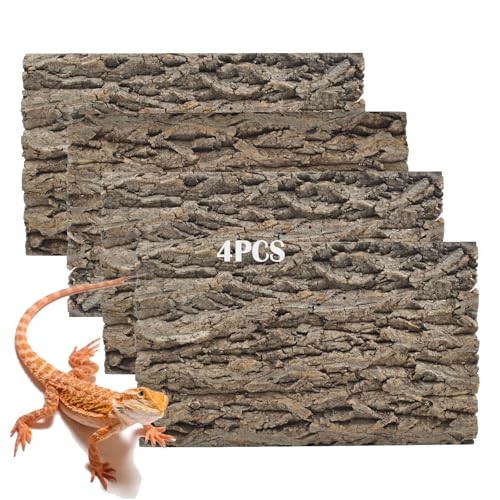
Extra Large Cork Bark Flat
Flat overhang hide that mimics wild rocky ledge shelters. Dragons walk under from the open front rather than entering a tunnel, making it ideal for large adults over 500g.
Frequently Asked Questions
Bearded dragons prefer dense, enclosed hides with a single entrance — specifically rocky cave designs that mimic the sheltered outcroppings of their native Australian habitat. Community data shows a preference for hides with a warm interior microclimate, moderate darkness, and an entrance they don't have to squeeze through. Large adults (over 400g) frequently prefer flat cork overhang hides when commercial cave entrances are too small for their body width.
References & Sources
Related Articles

Best Bearded Dragon Accessories: Complete Setup Guide
Discover the best bearded dragon accessories for a thriving enclosure — basking platforms, hides, hammocks, climbing décor, and expert design tips for every budget.

Best Bearded Dragon Starter Kit (2026): What You Really Need
Find the best bearded dragon starter kit in 2026. We break down what's worth buying, what to skip, and exactly what your beardie needs to thrive.

Best UVB Light for Bearded Dragon (2026 Keeper's Guide)
Find the best UVB light for your bearded dragon in 2026. T5 vs T8, wattage, placement, and top picks reviewed by reptile care specialists.