Finding the Best Chameleon Enclosure: A 2026 Guide
Choosing the best chameleon enclosure is key to a healthy pet. This guide covers the top picks for size, material (screen vs. glass), and setup for 2026.


This article contains affiliate links. If you make a purchase through these links, we may earn a small commission at no extra cost to you. See our affiliate disclosure for details.
We recommend 4 picks here. Our top choice is the Zoo Med ReptiBreeze XL — check price and availability below.
How we choose: we compare published specifications against the care requirements in veterinary and species-care literature, and weigh those against what long-time keepers report. We do not test products ourselves and we do not restate Amazon star ratings. The 5 sources behind this article are listed at the bottom.
Quick Comparison
- Enclosure Type
- All-screen mesh
- Primary Benefit
- Superior ventilation
- Best For
- Most chameleon keepers
- Price Tier
- $$
- Maintenance Level
- Moderate
- Enclosure Type
- Hybrid (solid sides + screen top)
- Primary Benefit
- Humidity balance
- Best For
- Dry climates
- Price Tier
- $$$
- Maintenance Level
- Moderate-High
- Enclosure Type
- Linear UVB tube
- Primary Benefit
- UVB radiation spread
- Best For
- All setups
- Price Tier
- $
- Maintenance Level
- Low (replacement)
- Enclosure Type
- Automated misting
- Primary Benefit
- Consistency & convenience
- Best For
- Busy keepers
- Price Tier
- $$
- Maintenance Level
- Low (automated)
Prices are estimates only. Actual prices on Amazon may vary.
Choosing the best chameleon enclosure is the single most important decision you'll make for your pet's health and happiness. It’s not just a box; it's their entire world. A proper habitat provides the temperature gradients, humidity, ventilation, and security that these sensitive creatures need to thrive. Get it right, and you're on your way to a vibrant, healthy companion. Get it wrong, and you could be facing stress, illness, and expensive vet bills.
As a herpetological care specialist, I've seen countless keepers struggle with setups that look good but are fundamentally wrong for a chameleon. They're often sold glass tanks that are perfect for a gecko but dangerous for a chameleon. This guide is here to cut through the confusion.
We'll cover the critical factors you need to consider: the ideal size (think vertical!), the great screen vs. glass debate, and how to create a functional, enriching environment inside the cage. Let's build the perfect home for your arboreal friend.
Why Your Chameleon's Enclosure is Its Entire World
Unlike a dog or cat that roams your house, a chameleon spends nearly its entire life inside its enclosure. This habitat must replicate all the vital aspects of its natural environment in the forests and jungles of Africa and the Middle East. It's a tall order, but it's achievable with the right knowledge.
Here’s what the enclosure is responsible for:
- Thermoregulation: Chameleons are ectothermic (cold-blooded), meaning they rely on external heat sources to regulate their body temperature. Your enclosure must provide a warm basking spot and a cooler area, allowing them to move between the two to heat up or cool down as needed.
- Ventilation: This is the big one. Chameleons are highly susceptible to respiratory infections caused by stagnant, humid air. An enclosure with poor airflow is a recipe for disaster. This is the primary reason why the material of your cage is so important.
- Hydration & Humidity: Chameleons don't drink from water bowls. They lick droplets off leaves. The enclosure must support a misting schedule that keeps plants wet and maintains the specific humidity level required by the species, whether it's a Veiled, Panther, or Jackson's Chameleon.
- Security: These animals are prey in the wild. They are naturally shy and easily stressed. A barren, open cage will make them feel exposed and anxious. A well-designed enclosure filled with foliage and climbing branches provides the cover they need to feel safe.
- UVB Exposure: Chameleons need UVB light to synthesize vitamin D3, which allows them to absorb calcium. Without it, they develop Metabolic Bone Disease (MBD), a crippling and often fatal condition. The enclosure's design must allow for proper placement of UVB lighting.
Investing in the best chameleon enclosure from the start is an investment in your pet's long-term health. It prevents common problems and allows your chameleon to display its full range of natural behaviors.
Why Enclosure Design Matters
What you need to know
Thermoregulation: Chameleons need warm basking spots and cooler areas to regulate body temperature
Ventilation: Prevents respiratory infections caused by stagnant, humid air
Hydration & Humidity: Chameleons drink from leaf droplets, requiring regular misting and proper humidity
Security: Shy, stress-prone animals need foliage and branches to feel safe and covered
UVB Exposure: Essential for vitamin D3 synthesis to prevent Metabolic Bone Disease (MBD)
Chameleon Enclosure Size Guide
Adult Chameleons
24" × 24" × 48"
Gold standard for Veiled, Panther, and Jackson's Chameleons
Juvenile Chameleons
16" × 16" × 30" or 18" × 18" × 36"
Upgrade to full-size within 6-8 months
Priority
Vertical > Horizontal
Height is more important than floor space for arboreal climbers
Enclosure Material Comparison
Side-by-side comparison
| Feature | Screen Enclosure | Glass Enclosure |
|---|---|---|
| Ventilation | ★Superior airflow, prevents respiratory infections | Poor ventilation, breeding ground for bacteria |
| Humidity Retention | Challenging, requires frequent misting | ★Excellent, holds moisture well |
| Stress Level | ★Provides natural climbing and security | Reflections can cause chronic stress |
| Ease of Cleaning | ★Lightweight and simple | Heavy but durable |
| Best For | ★95% of chameleon keepers (recommended standard) | Only extreme desert climates with modifications |
Our Take: Screen enclosures are the industry standard and safest choice for most chameleon keepers due to superior ventilation and reduced stress.
Detailed Reviews
1. Zoo Med ReptiBreeze XL
Best Overall
Zoo Med ReptiBreeze XL
Pros
- •Superior airflow prevents stagnant air and respiratory infections
- •Lightweight and easy to move and clean
- •Mesh provides excellent climbing surfaces
Cons
- •Difficult to maintain high humidity in dry climates
- •Requires more frequent misting or powerful automatic system
Bottom Line
Industry-standard all-screen enclosure with aluminum/PVC frame and vinyl-coated mesh that provides superior ventilation critical for preventing chameleon respiratory infections.
2. Hybrid Chameleon Cage
Best for Dry Climates
Hybrid Chameleon Cage
Pros
- •Balances humidity retention and ventilation better than full-screen
- •Prevents overspray damage to surrounding walls
- •Maintains more moderate humidity levels
Cons
- •Ventilation reduced compared to full-screen enclosure
- •Heavier and more expensive than screen cages
- •Still risks stagnant air in side sections
Bottom Line
Compromise enclosure with solid PVC/glass sides and screen top/front that balances humidity retention with ventilation while preventing overspray damage.
3. ReptiSun 5.0 or 10.0 T5 HO UVB Lamp
Essential
ReptiSun 5.0 or 10.0 T5 HO UVB Lamp
Pros
- •Safe, wide UVB spread prevents eye damage
- •Covers entire enclosure length effectively
- •Essential for calcium absorption and metabolic bone disease prevention
- •Industry-standard option
Cons
- •Must not use compact/coil bulbs as alternative
- •Requires proper top-mounted installation
- •Needs replacement every 6-12 months
Bottom Line
Linear high-output T5 UVB tube that provides wide, safe spread of UVB radiation across enclosure length for vitamin D3 synthesis without eye damage risk.
4. MistKing Automatic Misting System
Premium Pick
MistKing Automatic Misting System
Pros
- •Ensures consistency in humidity and misting schedules
- •Saves substantial daily maintenance time and labor
- •Can be programmed for reliable automated hydration
- •Easy nozzle placement at enclosure top
Cons
- •Requires initial investment and setup
- •Needs regular cleaning and maintenance of nozzles
- •Not strictly necessary but highly recommended
Bottom Line
Automatic misting system that maintains consistent humidity levels and eliminates the need for manual hand-misting 2-3 times daily, significantly reducing maintenance burden.
Size Matters: How Big Should a Chameleon Cage Be?
When it comes to chameleons, think vertical. These are arboreal lizards, meaning they live in trees. Floor space is far less important than height. A tall enclosure allows them to climb, which is their primary form of exercise and enrichment.
For Adult Chameleons: For the most common pet species, like Veiled, Panther, and Jackson's Chameleons, the gold standard is an enclosure that is 24 inches long, 24 inches wide, and 48 inches tall (24"x24"x48"). A cage of this size provides ample room for a proper temperature gradient and a complex network of branches.
Can you go bigger? Absolutely! A larger space is always better, provided you can furnish it adequately and maintain the right temperatures. A [24x24x48 Chameleon Cage](https://www.amazon.com/dp/B0FSZ281HP?tag=krawlo-20 is widely considered the ideal minimum for an adult.
For Juvenile Chameleons: Starting a baby chameleon in a huge 4-foot tall cage can sometimes make it difficult for them to find food. Some keepers prefer to start with a smaller cage, such as a [16"x16"x30" or 18"x18"x36" enclosure](https://www.amazon.com/dp/B0DDTBRJ9H?tag=krawlo-20 This can work, but it means you'll have to buy a second, larger cage within 6-8 months.
A more cost-effective strategy is to buy the full-sized adult cage from the start and simply furnish it more densely. Add extra vines and plants in the lower sections so the young chameleon feels secure and has easy access to food and water. This way, you only have to buy one enclosure for the animal's entire life.
As ReptiFiles notes for Jackson's Chameleons, a taller enclosure is always a priority over a wider one. This principle holds true for all the commonly kept chameleon species.
Screen, Glass, or Hybrid? Choosing the Right Enclosure Type
This is the most critical choice you'll make. The material of your enclosure directly impacts ventilation, which is a life-or-death parameter for a chameleon.
Screen Enclosures: The Gold Standard
For 95% of chameleon keepers, an all-screen enclosure is the best choice. These cages, typically made of aluminum or PVC frames with vinyl-coated mesh, offer unbeatable ventilation.
-
Pros:
- Superior Airflow: The open mesh prevents air from becoming stagnant, drastically reducing the risk of upper respiratory infections.
- Lightweight: They are easy to move and clean.
- Excellent Climbing Surfaces: The mesh itself provides additional climbing opportunities.
-
Cons:
- Humidity Challenges: Maintaining high humidity can be difficult, as moisture escapes easily. This may require more frequent misting or a powerful misting system, especially if you live in a dry climate.
Screen cages like the [Zoo Med ReptiBreeze](https://www.amazon.com/dp/B07Y866155?tag=krawlo-20 are the industry standard for a reason. They provide the safety net of maximum airflow that these sensitive animals require.
Glass Enclosures: Use With Extreme Caution
Glass tanks are commonly sold in pet stores, but they are generally unsuitable for chameleons. While they excel at holding in heat and humidity, their lack of ventilation is a major flaw.
-
Pros:
- Holds Humidity: Excellent for species that need consistently high humidity.
- Maintains Heat: Better insulation than screen.
-
Cons:
- Dangerous Lack of Ventilation: This is the deal-breaker. Stagnant air is a breeding ground for bacteria and fungus, leading to respiratory infections.
- Reflections: Chameleons can see their reflection in the glass, which can cause chronic stress as they may perceive it as a rival.
If you live in an extremely dry desert climate, a glass enclosure might be necessary, but it would require significant modification, like adding computer fans to create cross-ventilation. For most keepers, it's a risk not worth taking.
Hybrid & PVC Enclosures: A Good Compromise
A Hybrid chameleon cage offers a middle ground. These enclosures typically have solid sides (PVC or glass) and a screen top and front door. This design helps retain more humidity than a full-screen cage while still providing decent airflow through the top.
-
Pros:
- Balances humidity retention and ventilation.
- Can prevent overspray from misting systems from damaging walls.
-
Cons:
- Ventilation is still reduced compared to a full-screen cage.
- Can be heavier and more expensive.
For a beginner, a screen enclosure is the safest and most straightforward option. As The Spruce Pets points out, good ventilation is a cornerstone of chameleon husbandry.
Creating a Vertical World: Branches, Vines, and Plants
Now for the fun part: decorating! Your goal is to create a dense, climbable world inside the enclosure. Don't just put one or two sticks in there. You want to create a network of pathways at various angles.
-
Branches and Vines: Use a mix of diameters. Sandblasted grapevine, manzanita wood, and bendable artificial vines are all great choices. Arrange them horizontally, vertically, and diagonally. Create a "basking branch" that sits directly under your heat and UVB lamps. The chameleon should be able to get within 6-12 inches of the lights, depending on the bulb's strength (always follow manufacturer instructions).
-
Foliage is Life: Plants provide security, give your chameleon a place to hide, help maintain humidity, and create surfaces for drinking water after misting. You can use either live or artificial plants.
- Live Plants: Pothos, Ficus benjamina, Schefflera (Umbrella Plant), and Hibiscus are popular, safe choices. They help boost ambient humidity naturally. If you go this route, be sure to find the Best Plants for Chameleons: 5+ Safe & Hardy Choices to ensure they are non-toxic.
- Artificial Plants: Easier to clean and require no maintenance. Look for silk plants over plastic ones, as they are softer and less likely to cause injury. Thoroughly wash any artificial plants before use.
The goal is to make the cage about 50-75% full of foliage and branches. Your chameleon should be able to move almost anywhere in the enclosure without having to go to the floor.
Essential Accessories and How to Mount Them
A cage is just a frame; the accessories bring it to life. Here's how to integrate them.
-
Lighting (Heat & UVB): This is non-negotiable. All lighting and heating elements must be placed on top of the screen lid, never inside the enclosure. Chameleons are notorious for climbing everywhere, and they will burn themselves severely on an exposed bulb. You'll need:
- A Basking Heat Lamp: A 60-100 watt incandescent bulb in a dome fixture is usually sufficient to create a basking spot of 85-95°F (check your species' specific needs).
- A Linear UVB Lamp: Do not use compact/coil UVB bulbs. They create a concentrated beam that can cause eye damage. You need a long, linear T5 HO (High Output) tube, like a [ReptiSun 5.0 or 10.0](https://www.amazon.com/dp/B07PNK42W8?tag=krawlo-20 that spans most of the enclosure's length. This provides a wide, safe spread of UVB radiation.
-
Misting/Hydration: You can mist by hand 2-3 times a day with a pressure sprayer, but an automatic misting system like a MistKing is a game-changer. It ensures consistency and saves you a ton of work. Mount the nozzles at the top of the enclosure, pointing them towards the plants, not directly at the basking spot.
-
Gauges: You need to monitor temperature and humidity. Get two digital thermometer/hygrometer combos. Place one sensor near the basking spot and another in the cooler, lower part of the cage. This lets you see the gradient at a glance.
The Drainage Dilemma: A Key to a Clean Cage
With all that misting, where does the water go? If it pools at the bottom, you'll have a swampy, bacteria-filled mess. A drainage solution is not optional.
Most high-quality screen enclosures, like the ReptiBreeze, come with a PVC floor tray. This is a good start. To create a true drainage system, you have a few options:
-
Drainage Tray: Place a separate, larger tray under the entire enclosure. Drill holes in the cage's PVC floor. Excess water will drip through into the tray below, which you can easily remove and empty daily.
-
Bucket System: Some keepers place their cage directly over a 5-gallon bucket and let the water collect there. This is a simple and effective method for catching large volumes of water.
What about substrate? For most keepers, especially beginners, a bare-bottomed enclosure with a good drainage system is the most hygienic option. Loose substrates like bark, sand, or soil can hold too much moisture, harbor bacteria, and pose an impaction risk if your chameleon accidentally ingests some while catching an insect. If you're a more advanced keeper looking into a bioactive setup, you will need a dedicated drainage layer like LECA or gravel, but this requires much more research and maintenance.
Choosing the right habitat can feel overwhelming, but focusing on these key principles—vertical space, maximum ventilation, and proper drainage—will set you and your pet up for success. Once you have the enclosure, you can start thinking about what kind of chameleon to get. If you're just starting, consider our guide on the Best Starter Chameleon: A 2026 Keeper's Top 3 Picks to help you decide.
Our Final Verdict
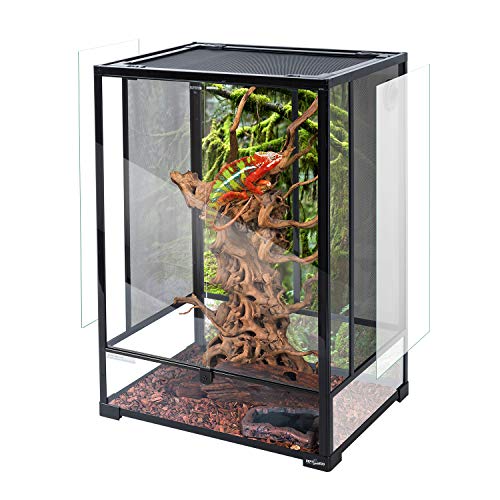
Zoo Med ReptiBreeze XL
Industry-standard all-screen enclosure with aluminum/PVC frame and vinyl-coated mesh that provides superior ventilation critical for preventing chameleon respiratory infections.
Hybrid Chameleon Cage
Compromise enclosure with solid PVC/glass sides and screen top/front that balances humidity retention with ventilation while preventing overspray damage.

ReptiSun 5.0 or 10.0 T5 HO UVB Lamp
Linear high-output T5 UVB tube that provides wide, safe spread of UVB radiation across enclosure length for vitamin D3 synthesis without eye damage risk.
Frequently Asked Questions
The best and safest enclosure for most chameleon species is a tall, all-screen cage. Screen provides essential ventilation, which is critical for preventing the respiratory infections that chameleons are prone to in stagnant air. Glass tanks should generally be avoided due to poor airflow.
References & Sources
Related Articles

Best Plants for Your Chameleon Enclosure: A Krawlo Guide
Discover the best plants for your chameleon enclosure, from safe live options to essential faux choices. Create a thriving, natural habitat with our expert guide.

Best Panther Chameleon Enclosure: Top Picks & Setup
Discover the best panther chameleon enclosure for your setup. Screen vs. hybrid, size guides, top picks, and expert tips to keep your chameleon thriving.

Best 4x2x2 Reptile Enclosure: Top Picks & Reviews 2026
Find the best 4x2x2 reptile enclosure for your pet. We compare PVC, wood, and hybrid options from Zen Habitats, Kages, and more — with honest pros and cons.