Best Bearded Dragon Calcium: A Complete 2026 Guide
Searching for the best bearded dragon calcium? Our expert guide covers why they need it, D3 vs. D3-free, and top picks to keep your dragon healthy and strong.


This article contains affiliate links. If you make a purchase through these links, we may earn a small commission at no extra cost to you. See our affiliate disclosure for details.
We recommend 3 picks here. Our top choice is the Rep-Cal Calcium with D3 — check price and availability below.
How we choose: we compare published specifications against the care requirements in veterinary and species-care literature, and weigh those against what long-time keepers report. We do not test products ourselves and we do not restate Amazon star ratings. The 6 sources behind this article are listed at the bottom.
Quick Comparison
- Supplement Type
- Calcium + Vitamin D3
- Contains D3
- Yes
- Adult Dosage Frequency
- 2-3 feedings per week
- Baby Dosage Frequency
- 1 feeding per day, 5 days/week
- Primary Function
- Calcium absorption + bone health
- Key Nutrients
- Calcium carbonate + Vitamin D3
- Supplement Type
- Calcium only
- Contains D3
- No
- Adult Dosage Frequency
- On non-D3 days (1 day/week)
- Baby Dosage Frequency
- Not typically needed
- Primary Function
- Bone health only
- Key Nutrients
- Calcium carbonate
- Supplement Type
- Comprehensive Multivitamin
- Contains D3
- No
- Adult Dosage Frequency
- 1 feeding per week
- Baby Dosage Frequency
- 1 feeding per day, 2 days/week
- Primary Function
- Overall health + immune support
- Key Nutrients
- Vitamins A, E, K (preformed retinol)
Prices are estimates only. Actual prices on Amazon may vary.
As a bearded dragon owner, you want what's best for your scaly friend. You’ve got the enclosure, the lighting, and the food down. But there's one crucial element that can make or break your dragon's health: calcium.
Getting supplementation right is one of the most important parts of reptile husbandry. Without the right balance, bearded dragons are at high risk for serious health problems, most notably Metabolic Bone Disease (MBD). But the world of supplements can be confusing. With D3? Without D3? How often? It's enough to make your head spin.
Don't worry, we've got you covered. In this guide, we'll break down everything you need to know to choose the best bearded dragon calcium and use it correctly. We'll help you keep your dragon strong, healthy, and thriving for years to come.
Why Your Bearded Dragon Desperately Needs Calcium
Think of calcium as the building block for your dragon's body. Just like in humans, it's essential for strong bones and teeth. But it does much more than that. Calcium is also vital for muscle function, nerve signaling, and even hormone regulation. Your dragon needs it for everything from catching a cricket to just breathing.
Bearded dragons in the wild get calcium from their varied diet of insects and plants. In captivity, however, it's nearly impossible to replicate this. Most commercially available feeder insects (like crickets and dubia roaches) are naturally low in calcium and high in phosphorus.
This is where the problem starts. Phosphorus binds with calcium, preventing the body from absorbing it. If a dragon's diet is high in phosphorus and low in calcium, its body will start pulling calcium from its own bones to fuel other essential functions. This is the direct cause of Metabolic Bone Disease (MBD), a devastating and often fatal condition.
Supplementation Schedule by Age
Baby (0-6 months)
Calcium with D3: daily, 5 days/week | Multivitamin: daily, 2 days/week
Juvenile (6-12 months)
Calcium with D3: daily, 4 days/week | Calcium without D3: daily, 1 day/week | Multivitamin: daily, 2 days/week
Adult (12+ months)
Calcium with D3: 2-3 feedings/week | Multivitamin: 1 feeding/week
How to Properly Dust Feeders
Get a container
Use an empty deli cup, small plastic tub, or plastic bag
Add the powder
Put a small pinch of the day's designated supplement into the container
Add the insects
Drop in the number of feeder insects you plan to offer in that meal
Shake gently
Swirl or gently shake the container until the insects are lightly coated (like a powdered donut)
Feed immediately
Dump the dusted insects into your dragon's food bowl or offer them one by one—powder falls off over time
Three Non-Negotiable Selection Criteria
What you need to know
Phosphorus-Free: The supplement must not contain phosphorus—your dragon already gets plenty from food, and more will inhibit calcium absorption
Ultra-Fine Powder: The powder must be incredibly fine so it sticks easily to feeder insects and vegetables; coarse powder will just fall off
Reputable Brand: Stick with well-known, trusted brands like Rep-Cal, Zoo Med, and Miner-All that have a proven track record in the reptile community
Calcium with D3 vs Calcium without D3
Side-by-side comparison
| Feature | Calcium with D3 | Calcium without D3 |
|---|---|---|
| Primary Use | ★Go-to, main supplement (workhorse of routine) | Used on alternate days to prevent D3 toxicity |
| Vitamin D3 | Contains synthetic D3 | ★None—pure calcium carbonate only |
| When Used | Most supplement feedings (daily frequency varies by age) | 1-2 times per week for juveniles/adults only |
| Risk Profile | Prevents deficiency; essential for absorption | Protects against D3 overdose without sacrificing calcium |
Our Take: Use Calcium with D3 most frequently as your primary supplement; alternate with plain Calcium without D3 to maintain balance without risking D3 toxicity.
Detailed Reviews
1. Rep-Cal Calcium with D3
Best Overall
Rep-Cal Calcium with D3
Pros
- •Combines calcium and D3 in single product
- •Primary routine supplementation
- •Well-known trusted reptile brand
- •Simplifies feeding schedule
Cons
- •Can cause D3 toxicity if overused
- •Requires alternation with non-D3 calcium in older dragons
Bottom Line
The primary workhorse supplement combining calcium carbonate with synthetic Vitamin D3 in one formula. Designed as the go-to daily supplement for bearded dragons of all ages.
2. Rep-Cal Calcium without D3
Best for Balanced Schedule
Rep-Cal Calcium without D3
Pros
- •Prevents D3 overdose
- •Allows flexible supplementation scheduling
- •Pure calcium formulation
- •Trusted brand quality
Cons
- •Lacks D3 for calcium absorption
- •Must be used in combination with D3 supplement
- •Not sufficient as standalone supplement
Bottom Line
Pure calcium carbonate powder with no added Vitamin D3. Used strategically on alternating days to prevent D3 toxicity while maintaining consistent calcium intake.
3. Herptivite Multivitamin
Best for Micronutrients
Herptivite Multivitamin
Pros
- •Provides essential micronutrients beyond calcium
- •Supports immune system and vision
- •Contains preformed Vitamin A (retinol) not beta-carotene
- •Important for health beyond bone support
Cons
- •Less frequently used than calcium supplements
- •Secondary supplement not primary
- •Typically only 1-2 times per week for adults
Bottom Line
Comprehensive multivitamin providing Vitamins A, E, and K for overall health, immune function, and vision. Formulated with preformed Vitamin A (retinol) that bearded dragons can utilize.
The Critical Role of Vitamin D3
You can't talk about calcium without mentioning Vitamin D3. Think of D3 as the key that unlocks the door for calcium. Without it, a bearded dragon's body simply can't absorb and use the calcium it consumes, no matter how much you provide.
In their native Australian habitat, bearded dragons synthesize D3 naturally by basking in the strong, unfiltered sunlight. This is why proper UVB lighting in their enclosure is non-negotiable. A high-quality UVB bulb mimics the sun and allows your dragon to produce its own D3.
So, if they have a UVB light, why do they need D3 in their supplement? It's a form of insurance. Factors like the age of your UVB bulb (they lose potency over time), the distance to the basking spot, and whether the light is obstructed by a screen mesh can all affect D3 synthesis. Providing D3 in their supplement ensures they have enough to properly metabolize calcium.
Types of Bearded Dragon Calcium Supplements
When you walk into a pet store or browse online, you'll see a few different options. Understanding the difference is key to creating a safe and effective supplement schedule.
Calcium with Vitamin D3
This is your primary, go-to supplement. It combines calcium carbonate with synthetic Vitamin D3. This type of product, like [Rep-Cal Calcium with D3](https://www.amazon.com/dp/B09ZQ74495?tag=krawlo-20 is designed to be the workhorse of your dragon's supplementation routine. It provides both the mineral and the vitamin needed for absorption in one easy step.
Calcium without Vitamin D3
This is pure calcium carbonate, with no added D3. You might wonder why you'd ever use this. The reason is to prevent a D3 overdose. While essential, D3 is a fat-soluble vitamin, meaning the body stores it. Giving too much can lead to toxicity. Using a plain calcium powder, like [Rep-Cal Calcium without D3](https://www.amazon.com/dp/B00BS96GLE?tag=krawlo-20 on certain days allows you to provide necessary calcium without overloading their system with D3.
Multivitamins
While calcium is the star player, it's not the only nutrient your dragon needs. A good multivitamin provides a range of other essential vitamins and minerals, including Vitamin A, E, and K. Products like Herptivite Multivitamin are crucial for overall health, immune function, and vision. It's important to use a multivitamin formulated with preformed Vitamin A (retinol), not beta-carotene, as bearded dragons cannot efficiently convert beta-carotene.
How to Choose the Best Calcium Supplement
With the different types in mind, how do you pick the right one? Here are the three non-negotiable factors to look for:
- Phosphorus-Free: This is the most important rule. The supplement must not contain phosphorus. Your dragon already gets plenty from its food, and adding more will only inhibit calcium absorption.
- Ultra-Fine Powder: The powder should be incredibly fine so it sticks easily to feeder insects and vegetables. A gritty, coarse powder will just fall off, meaning your dragon won't actually consume it.
- Reputable Brand: Stick with well-known, trusted brands in the reptile community. Companies like Rep-Cal, Zoo Med, and Miner-All have a long track record of producing high-quality, effective supplements.
Bearded Dragon Supplementation Schedule
Creating a consistent schedule is the easiest way to ensure your dragon gets exactly what it needs. The frequency of supplementation changes as your dragon ages, because growing babies require more resources than established adults.
Here’s a simple, effective schedule to follow. "Dusting" refers to lightly coating the feeder insects or salad in the appropriate supplement powder just before feeding.
| Age | Calcium with D3 | Calcium without D3 | Multivitamin |
|---|---|---|---|
| Baby (0-6 months) | 1 feeding per day, 5 days/week | Not typically needed | 1 feeding per day, 2 days/week |
| Juvenile (6-12 months) | 1 feeding per day, 4 days/week | 1 feeding per day, 1 day/week | 1 feeding per day, 2 days/week |
| Adult (12+ months) | 2-3 feedings per week | On non-D3 days | 1 feeding per week |
This schedule ensures they get a steady supply of calcium and vitamins without risking over-supplementation of D3. Remember, adult dragons eat fewer insects and more salads, so you'll be dusting their greens on most supplement days.
It's also a good idea to monitor your dragon's health. For instance, if you notice signs of lethargy that aren't related to illness, you might want to review their environment and consider if it's related to their seasonal behavior. For more on this, check out our guide on Bearded Dragon Brumation Signs.
How to Properly Dust Feeders
Applying the supplement is simple. The goal is a light, even coating—think powdered donut, not breaded chicken.
- Get a container: An empty deli cup, small plastic tub, or even a plastic bag will work.
- Add the powder: Put a small pinch of the day's designated supplement into the container.
- Add the insects: Drop in the number of feeder insects you plan to offer in that meal.
- Shake gently: Swirl or gently shake the container until the insects are lightly coated.
- Feed immediately: Dump the dusted insects into your dragon's food bowl or offer them one by one. The powder will fall off over time, so prompt feeding is key.
For salads, you can simply sprinkle the powder over the greens and mix it in lightly before serving.
Signs of Calcium Deficiency (MBD)
Recognizing the early signs of MBD is critical for a positive outcome. If you see any of these symptoms, a visit to a qualified reptile vet is in order immediately. MBD is treatable, but only if caught early.
- Lethargy: Unusual tiredness or lack of energy.
- Weakness: Difficulty walking or climbing.
- Shaking/Tremors: Uncontrollable twitching in the limbs or jaw.
- Swollen Jaw: A soft, swollen, or deformed-looking jawline (often called "rubber jaw").
- Bumps on Spine/Legs: Deformities or bumps along the back, tail, or legs.
- Loss of Appetite: Refusing food.
Proper care, including the right environment, is key to preventing these issues. A healthy dragon needs not only supplements but also correct temperatures, which can be maintained with tools like a good heating mat. If you need help choosing one, you can read our review of the best heating mat for a bearded dragon.
Can You Give a Bearded Dragon Too Much Calcium?
While calcium deficiency is the far more common problem, it is technically possible to over-supplement, particularly with Vitamin D3. This condition, known as hypercalcemia, can cause calcium to be deposited in soft tissues and organs, leading to kidney failure.
Symptoms of overdose are often vague but can include:
- Decreased appetite
- Weight loss
- Constipation
- Increased thirst and urination
This is why following a balanced schedule and using a mix of D3 and non-D3 calcium is so important. It provides the calcium they need while creating a safeguard against D3 toxicity. Sticking to the recommended products and schedule is the best way to avoid this.
Choosing the best bearded dragon calcium doesn't have to be a chore. By understanding the 'why' behind the different formulas and sticking to a simple, age-appropriate schedule, you can provide your pet with the foundation for a long, healthy, and happy life. It's one of the most impactful things you can do as a responsible reptile keeper.
Our Final Verdict

Rep-Cal Calcium with D3
The primary workhorse supplement combining calcium carbonate with synthetic Vitamin D3 in one formula. Designed as the go-to daily supplement for bearded dragons of all ages.
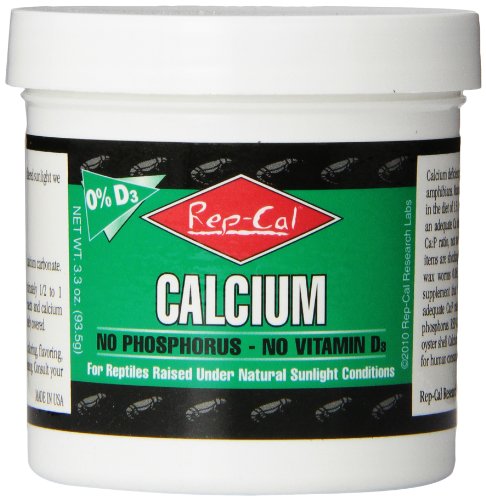
Rep-Cal Calcium without D3
Pure calcium carbonate powder with no added Vitamin D3. Used strategically on alternating days to prevent D3 toxicity while maintaining consistent calcium intake.
Herptivite Multivitamin
Comprehensive multivitamin providing Vitamins A, E, and K for overall health, immune function, and vision. Formulated with preformed Vitamin A (retinol) that bearded dragons can utilize.
Frequently Asked Questions
It depends on their age. Baby dragons (0-6 months) need calcium with D3 at one feeding, 5 days a week. Juvenile dragons (6-12 months) need it 3-4 days a week. Adults (1+ years) only need it on their insect feedings, typically 2-3 times per week.
References & Sources
- https://healthtopics.vetmed.ucdavis.edu/health-topics/exotics/bearded-dragon-care
- https://www.zenhabitats.com/blogs/reptile-care-sheets-resources/bearded-dragon-supplementation-guide?srsltid=AfmBOorT0r2-8PtVbkEhFt-hf7jtylQyCPAzSAmQ1T3_Smf59OaQWxUA
- https://reptifiles.com/bearded-dragon-care/
- https://reptifiles.com/reptile-vitamins-reptile-calcium/
- https://reptifiles.com/product-review-jurassic-natural-reptile-calcium-powder/
- https://reptifiles.com/bearded-dragon-care/bearded-dragon-illnesses-health/metabolic-bone-disease-mbd/
Related Articles

Best Calcium Supplement for Bearded Dragon: 7 Picks for Stronger Bones (2026)
Find the best calcium supplement for bearded dragon with our 7-pick breakdown — covers D3 vs no-D3, dosing schedules, and MBD prevention. Start here.

Best Bearded Dragon Accessories: Complete Setup Guide
Discover the best bearded dragon accessories for a thriving enclosure — basking platforms, hides, hammocks, climbing décor, and expert design tips for every budget.

Best Bearded Dragon Starter Kit (2026): What You Really Need
Find the best bearded dragon starter kit in 2026. We break down what's worth buying, what to skip, and exactly what your beardie needs to thrive.