Best Axolotl Filter: Top Picks for Clean, Safe Water
The best axolotl filter keeps water clean without stressing your axolotl's delicate gills. Compare sponge, canister, and HOB options with our top picks.


This article contains affiliate links. If you make a purchase through these links, we may earn a small commission at no extra cost to you. See our affiliate disclosure for details.
We recommend 5 picks here. Our top choice is the Fluval 207 Performance Canister Filter — check price and availability below.
How we choose: we compare published specifications against the care requirements in veterinary and species-care literature, and weigh those against what long-time keepers report. We do not test products ourselves and we do not restate Amazon star ratings. The 4 sources behind this article are listed at the bottom.
Quick Comparison
- Recommended Tank Size
- Up to 45 gallons
- Filter Type
- Canister
- Flow Rate
- 206 GPH
- Price Range
- $80-$110
- Adjustable Output
- Yes (spray bar)
- Filtration Stages
- 3-stage (mechanical/biological/chemical)
- Recommended Tank Size
- Up to 40 gallons
- Filter Type
- Sponge (air-driven)
- Flow Rate
- Gentle/Variable
- Price Range
- $10-$20 (+pump)
- Adjustable Output
- No
- Filtration Stages
- 1-stage (biological)
- Recommended Tank Size
- 20-50 gallons
- Filter Type
- Hang-On-Back
- Flow Rate
- 200 GPH (adjustable)
- Price Range
- $40-$60
- Adjustable Output
- Yes (flow dial)
- Filtration Stages
- 3-stage (mechanical/biological/chemical)
- Recommended Tank Size
- 20 gallons
- Filter Type
- Canister
- Flow Rate
- Not specified
- Price Range
- $35-$60
- Adjustable Output
- Yes (spray bar)
- Filtration Stages
- 3-stage (mechanical/biological/chemical)
- Recommended Tank Size
- Up to 30 gallons
- Filter Type
- Sponge (air-driven)
- Flow Rate
- Gentle/Variable
- Price Range
- Under $10
- Adjustable Output
- No
- Filtration Stages
- 1-stage (biological)
Prices are estimates only. Actual prices on Amazon may vary.
Axolotls are unlike most aquatic pets. They're sensitive, slow-moving, and surprisingly delicate when it comes to water quality. Getting the right filter is one of the most important decisions you'll make as an axolotl owner.
But not just any aquarium filter will work. Axolotls hate strong currents. Too much flow and you'll stress them out, damage their gills, or push them around the tank constantly. At the same time, they produce a lot of waste — so filtration has to be powerful enough to keep the water clean.
It's a balancing act. This guide breaks down the best axolotl filters for every tank size and budget, plus exactly what to look for before you buy.
Why Axolotls Need the Right Filter
Axolotls are cold-water animals. They thrive between 60–68°F (16–20°C) and struggle when temperatures climb above 72°F (22°C). That already sets them apart from most tropical fish.
They're also heavy waste producers. A single adult axolotl can foul a tank quickly without adequate filtration. You need strong biological filtration to break down ammonia from their waste into less harmful compounds.
But here's the catch: axolotls have feathery external gills. Strong currents can stress them and physically damage those delicate gill filaments. If you see your axolotl constantly swimming against the current, hiding near the filter output, or looking generally agitated — your flow rate is probably too high.
The goal is gentle but thorough filtration. That's the challenge, and that's why picking the right filter matters so much.
Axolotl Filter Flow Rate Guide
Recommended Flow Rate
5–10x tank volume per hour
Experienced keepers prefer staying closer to 5x
20-Gallon Tank
100–200 GPH maximum
Exceeding this stresses gills
40-Gallon Tank
200–400 GPH maximum
Adjust with spray bar if needed
Sponge vs. Canister Filters for Axolotls
Side-by-side comparison
| Feature | Sponge Filter | Canister Filter |
|---|---|---|
| Water Flow | ★Very gentle, nearly impossible to over-filter | Can be strong, requires flow adjustment |
| Biological Filtration | Excellent bacteria colonization surface | Very high capacity for large bioloads |
| Cost | ★$10–20 + air pump | $80–110+ |
| Tank Size | Best up to 40 gallons | ★20 gallons and larger |
| Setup Complexity | ★Simple, air-pump-driven | More involved, requires priming |
Our Take: Sponge filters win for safety and simplicity in small-to-medium tanks; canister filters excel where powerful adjustable filtration is required.
Best Axolotl Filters
Quick recommendations
206 GPH—ideal for axolotls; four media baskets for multi-stage filtration; fully adjustable output nozzle to diffuse flow gently
Double sponge blocks maximize biological filtration; incredibly gentle flow safe for delicate gills; ideal for juveniles and flow-sensitive setups
Adjustable flow control dial for precise management; 200 GPH can be dialed down; large flexible media chamber for multi-stage filtration
Detailed Reviews
1. Fluval 207 Performance Canister Filter
Best Overall
Fluval 207 Performance Canister Filter
Pros
- •Low flow rate (206 GPH) appropriate for axolotls
- •Four media baskets for layered filtration
- •Quiet operation with motor outside tank
- •Fully adjustable output nozzle
- •Straightforward maintenance every 2-3 months
Cons
- •More expensive upfront than other options
- •Takes about 20 minutes to set up
Bottom Line
Canister filter rated for tanks up to 45 gallons with 206 GPH flow rate and four media baskets. Gold standard for most axolotl setups with fully adjustable output nozzle.
2. Hygger Double Sponge Filter
Best Sponge Filter
Hygger Double Sponge Filter
Pros
- •Incredibly gentle flow that won't stress gills
- •Completely safe intake—no risk of limbs or gill filaments getting stuck
- •Double sponge surface area for excellent biological filtration
- •Excellent for juvenile or sensitive axolotls
- •Beneficial bacteria colonize heavily over time
Cons
- •Requires separate air pump
- •Less mechanical filtration than canister or HOB filters
Bottom Line
Double sponge filter with two sponge blocks driven by air pump. Safest, most axolotl-friendly option with incredibly gentle flow and zero risk of suction injuries.
3. AquaClear 50 Power Filter
Best Hang-On-Back
AquaClear 50 Power Filter
Pros
- •Adjustable flow rate dial (can dial down 50-75% for axolotls)
- •Large, flexible media chamber
- •Included foam insert plus ceramic rings for multi-stage filtration
- •Easy installation and maintenance
- •Large pre-filter sponge adds extra protection
Cons
- •HOB waterfall-style output can create surface turbulence
- •Can get noisy if water level drops too low
- •Requires pre-filter sponge on intake for gill safety
Bottom Line
HOB filter for 20-50 gallon tanks with 200 GPH at full power and adjustable flow control dial. Can be dialed down significantly for axolotl-safe operation.
4. Penn Plax Cascade Canister Filter
Best for Small Tanks
Penn Plax Cascade Canister Filter
Pros
- •Budget-friendly canister option
- •Multiple media trays for three-stage filtration
- •Gentle, adjustable flow rate
- •Includes spray bar attachment to diffuse output
- •Solid performance for single adult axolotl
Cons
- •Not as premium/powerful as the Fluval 207
- •Less capacity for larger or heavily stocked tanks
Bottom Line
Affordable canister filter for 20-gallon axolotl tanks with multiple media trays and adjustable, gentle flow rate. Includes spray bar attachment.
5. Aquaneat Sponge Filter
Best Budget Option
Aquaneat Sponge Filter
Pros
- •Very cheap (under $10)
- •Gentle flow rate safe for axolotls
- •Five-minute setup
- •Easy to clean
- •Excellent as backup filter if main filter fails
Cons
- •Limited mechanical filtration
- •Less aesthetically pleasing in tank
- •Requires separate air pump
Bottom Line
Reliable, affordable sponge filter for tanks up to 30 gallons. Five-minute setup with gentle flow, ideal for beginners, quarantine tanks, or backup filtration.
The Golden Rule: Low Flow Rate
This is the single most important thing to understand about axolotl filtration. Your filter's flow rate should be no more than 5–10 times the tank volume per hour — and many experienced keepers prefer staying closer to 5x.
For a 20-gallon tank, that means you want a filter rated for roughly 100–200 GPH (gallons per hour) at most. For a 40-gallon tank, look for 200–400 GPH.
You can also baffle the output of a stronger filter using a spray bar or a sponge over the output nozzle. This disperses the flow and reduces current velocity without sacrificing filtration power.
If you're just getting started with axolotls, check out our Axolotl Pet Care Guide: Tank Setup, Feeding & Health Tips — it covers everything from tank cycling to diet in one place.
Types of Filters for Axolotls
There are three main filter types worth considering for axolotl tanks. Each has strengths and trade-offs.
Sponge Filters
Sponge filters are the classic choice for axolotl keepers. They work by pulling water through a foam sponge using an air pump. The sponge traps debris and hosts beneficial bacteria for biological filtration.
Pros:
- Very gentle flow — almost impossible to over-filter with a sponge filter
- Excellent surface area for beneficial bacteria colonies
- Cheap and easy to maintain
- Safe for baby axolotls (no risk of suction injury to limbs or gills)
Cons:
- Can look bulky in the tank
- Requires a separate air pump to run
- Less mechanical filtration than canister or HOB filters
Sponge filters work best in tanks up to 40 gallons. For larger setups, you'd need multiple sponge filters or a larger dual-sponge model.
Canister Filters
Canister filters sit outside the tank and pull water through multiple media chambers. They offer the best combination of mechanical, biological, and chemical filtration in one unit.
Pros:
- High filtration capacity for large bioloads
- Very quiet — motor is outside the tank
- Easy to customize with different media types
- Great for tanks 20 gallons and up
Cons:
- More expensive upfront than other options
- Output flow can be strong — may need a spray bar attachment
- More steps to set up and maintain
Canister filters are the top choice for serious axolotl keepers. You can adjust the output direction to prevent strong currents, and they keep large tanks exceptionally clean.
Hang-On-Back (HOB) Filters
HOB filters hang on the tank rim and pull water up through a siphon tube. They're common in freshwater setups and work reasonably well for axolotls with a few simple modifications.
Pros:
- Easy to install and maintain
- Good mechanical and biological filtration
- Widely available at any pet store
Cons:
- Waterfall-style output can create surface turbulence
- Can get noisy if the water level drops too low
- Flow rate adjustability varies a lot by model
For axolotls, choose an HOB filter with an adjustable flow rate. Add a pre-filter sponge on the intake tube to protect your axolotl's gills from suction and boost biological filtration. According to The Spruce Pets, choosing the right filter type depends heavily on tank size and your animals' bioload — both factors axolotl keepers need to weigh carefully.
Our Top Picks for Best Axolotl Filter
Here are the best axolotl filters by category, covering every setup from small beginner tanks to large adult habitats.
Best Overall: Fluval 207 Performance Canister Filter
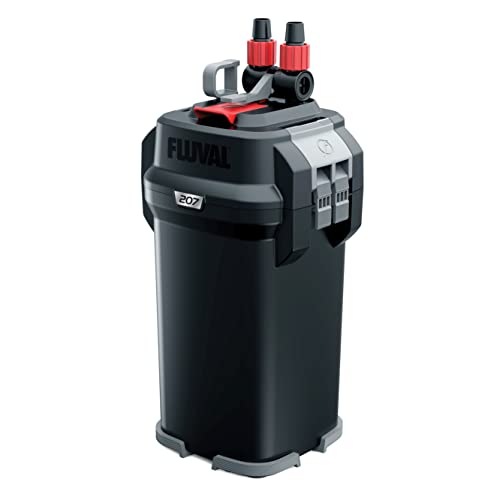
For most axolotl setups, a canister filter is the gold standard. The [Fluval 207 canister filter](https://www.amazon.com/dp/B07JHG13WP?tag=krawlo-20 handles tanks up to 45 gallons with a flow rate of 206 GPH. That's on the lower end for a canister — which is exactly what you want for axolotls.
(Estimates only — actual prices on Amazon may vary.) The Fluval 207 typically runs in the $80–$110 range.
It has four media baskets, so you can layer mechanical, biological, and chemical filtration. The output nozzle is fully adjustable — point it at the tank wall to diffuse the flow gently. Setup takes about 20 minutes, and maintenance is straightforward every 2–3 months.
This is the filter we'd recommend for most adult axolotl tanks. It's quiet, reliable, and powerful enough for the waste load one or two axolotls produce.
Best Sponge Filter: Hygger Double Sponge Filter
If you want the safest, most axolotl-friendly option possible, go with a double sponge filter like the [Hygger Double Sponge Filter](https://www.amazon.com/dp/B07RFL4JMM?tag=krawlo-20 It uses two sponge blocks for double the biological filtration surface area, driven by an air pump.
The flow is incredibly gentle. It won't stress your axolotl's gills, and the intake is completely safe — no risk of a curious axolotl getting a leg or gill filament stuck against it. Sponge filters are especially great for juvenile axolotls or keepers who are worried about flow rate.
(Estimates only — actual prices on Amazon may vary.) These typically cost $10–$20, plus an air pump if you don't already have one.
The main thing to love here: the sponge becomes a biological powerhouse over time. Beneficial bacteria colonize it heavily, giving you stable water chemistry with almost no current. Clean it by gently squeezing it in old tank water — never tap water, which kills beneficial bacteria.
Best Hang-On-Back: AquaClear 50 Power Filter
The [AquaClear 50 power filter](https://www.amazon.com/dp/B0DCG2JH8Y?tag=krawlo-20 is consistently praised for its adjustable flow rate and large media chamber. It's rated for 20–50 gallon tanks and pushes 200 GPH at full power — but you can dial it down significantly for axolotls.
(Estimates only — actual prices on Amazon may vary.) It usually sells in the $40–$60 range.
What sets the AquaClear apart from cheaper HOB filters is the flow control dial. Turn it down to 50–75% power and you get solid filtration without blasting your axolotl across the tank. Add a pre-filter sponge on the intake for extra protection and bonus biological filtration.
The media chamber is large and flexible. Use the included foam insert plus ceramic rings for excellent multi-stage filtration. It's a great option if you want HOB convenience without sacrificing axolotl safety.
Best for Small Tanks: Penn Plax Cascade Canister Filter
For 20-gallon axolotl tanks, the [Penn Plax Cascade canister filter](https://www.amazon.com/dp/B0002DJ9NY?tag=krawlo-20 is worth a look. It's a more affordable canister with multiple media trays and a gentle, adjustable flow rate.
(Estimates only — actual prices on Amazon may vary.) Typically runs $35–$60 depending on model size.
It's not as premium as the Fluval, but for a single adult axolotl in a 20-gallon tank, it delivers solid performance at a budget-friendly price. The included spray bar attachment helps diffuse the output to axolotl-friendly levels.
Best Budget Option: Aquaneat Sponge Filter
If you're just starting out or setting up a quarantine tank, the Aquaneat sponge filter is a reliable, cheap option. It works well for tanks up to 30 gallons and costs under $10.
(Estimates only — actual prices on Amazon may vary.)
It won't win any awards for aesthetics, but it does the job. The flow is gentle, setup takes five minutes, and it's easy to clean. Pair it with a basic air pump and you have a functional, safe filtration setup for very little money.
This is also a solid backup filter to keep running at all times. If your main filter ever fails, a spare sponge filter with an established bacterial colony is a genuine lifesaver.
What to Look For in an Axolotl Filter
Shopping for filters can get overwhelming fast. Here's what actually matters for axolotl tanks.
Flow Rate
Always check GPH and compare it to your tank volume. You want 5–10x the tank volume per hour, maximum. Axolotls prefer the lower end of that range. A filter that's "rated for" your tank size might still push too much current for a sensitive axolotl — check the actual GPH number, not just the gallon rating.
Adjustable Output
Look for filters with adjustable flow dials or spray bar attachments. These let you dial back the current without reducing filtration power. This feature is especially important for canister and HOB filters, which tend to push more flow.
Three-Stage Filtration
Good axolotl filtration covers all three bases:
| Stage | Purpose | Examples |
|---|---|---|
| Mechanical | Traps solid waste particles | Foam, filter floss |
| Biological | Houses beneficial bacteria | Ceramic rings, bio-balls, sponge |
| Chemical | Removes dissolved toxins | Activated carbon |
Sponge filters handle biological filtration beautifully but offer limited mechanical filtration. Canister filters excel at all three stages.
Intake Safety
Axolotls are curious and clumsy. They can get a small limb or gill tuft sucked against a bare intake tube. Always use a pre-filter sponge over any intake near the bottom of your tank. This is a non-negotiable safety measure — not optional.
Noise Level
Axolotls are sensitive to vibrations. Loud, rattling filters can stress them over time. Canister filters are typically the quietest option since the motor sits outside the tank. Sponge filters driven by air pumps are also quiet if you use a quality pump with an adjustable flow valve.
How to Cycle Your Filter Before Adding an Axolotl
Before your axolotl goes in the tank, you need to cycle it. Cycling means establishing a colony of beneficial bacteria in your filter media that converts ammonia (highly toxic) into nitrite and then into nitrate (manageable at low levels with regular water changes).
The nitrogen cycle typically takes 4–6 weeks without fish, or 2–3 weeks if you use a bottled bacteria product like Seachem Prime plus Stability. According to The Spruce Pets' water guide for axolotls, axolotls cannot tolerate any detectable ammonia or nitrite — even small spikes cause gill damage and can be fatal.
Never rush the cycle. An uncycled tank is the number one cause of axolotl illness and death in new setups. Test your water weekly with an [API Freshwater Master Test Kit](https://www.amazon.com/dp/B000255NCI?tag=krawlo-20 until ammonia and nitrite both consistently read 0 ppm.
Filter Maintenance Schedule
Even the best filter won't work if you ignore it. Here's a simple maintenance schedule to keep things running smoothly:
| Task | Frequency |
|---|---|
| Rinse mechanical media (foam/floss) in tank water | Every 2–4 weeks |
| Squeeze sponge filter gently in old tank water | Every 2–4 weeks |
| Clean canister filter internals + tubing | Every 2–3 months |
| Replace activated carbon (chemical media) | Every 4–6 weeks |
| 20–30% partial water change | Weekly |
| Test ammonia, nitrite, and nitrate levels | Weekly |
One critical rule: never replace all filter media at the same time. Doing so wipes out your beneficial bacteria colony and essentially restarts your tank cycle from scratch. Replace media in stages — swap out the mechanical media first, and only replace biological media (ceramic rings, sponge) when it's physically falling apart.
Final Thoughts
The right filter makes axolotl keeping so much easier. Healthy water means a healthy axolotl — and that starts with a filter that cleans thoroughly without turning your tank into a current machine.
Our top recommendation for most setups is the [Fluval 207 canister filter](https://www.amazon.com/dp/B07JHG13WP?tag=krawlo-20 for its adjustable output, quiet motor, and excellent filtration capacity. If you're working with a tighter budget or want the safest possible option for a younger axolotl, the [Hygger Double Sponge Filter](https://www.amazon.com/dp/B07RFL4JMM?tag=krawlo-20 is hard to beat.
Whichever filter you choose, pair it with regular water testing, weekly partial water changes, and a fully cycled tank — and your axolotl will thrive.
Planning to bring home an axolotl soon? Check out our guide on Axolotl for Sale: Where to Buy + What to Know Before You Get One for everything you need before you shop.
Our Final Verdict
Fluval 207 Performance Canister Filter
Canister filter rated for tanks up to 45 gallons with 206 GPH flow rate and four media baskets. Gold standard for most axolotl setups with fully adjustable output nozzle.

Hygger Double Sponge Filter
Double sponge filter with two sponge blocks driven by air pump. Safest, most axolotl-friendly option with incredibly gentle flow and zero risk of suction injuries.

AquaClear 50 Power Filter
HOB filter for 20-50 gallon tanks with 200 GPH at full power and adjustable flow control dial. Can be dialed down significantly for axolotl-safe operation.
Frequently Asked Questions
Sponge filters and canister filters are the two best options for axolotls. Sponge filters are the safest choice for juveniles and smaller tanks — they create almost no current and are completely safe for delicate gills. Canister filters are the top pick for adult axolotls in 20–40+ gallon tanks because they combine powerful filtration with adjustable output flow.
References & Sources
- https://reptilesmagazine.com/axolotl-care-sheet/?srsltid=AfmBOorTgH1S8R83nsJA8HnyYN0AMR6eyT8hyhHEG246lAXW738lvo0b
- https://www.thesprucepets.com/best-filters-for-axolotl-7971537
- https://www.thesprucepets.com/water-for-axolotls-1238302
- https://www.thesprucepets.com/before-you-buy-an-aquarium-filter-1378506
Related Articles

Best Axolotl Decor: 5 Safe and Stimulating Tank Ideas
Looking for the best axolotl decor? Our expert guide covers safe substrates, essential hides, and plants to create a thriving and enriching habitat for your pet.

Best Axolotl Heating? Why Cooling Is Actually Key
Searching for the best axolotl heating solution? You might be surprised to learn these amphibians need cooling, not heat. Our guide covers the ideal temperature and the best methods to keep your axolotl safe and healthy.

Best Axolotl Lighting: What Actually Works (2026)
Axolotls need low, indirect lighting to thrive. Learn which lights work best, how long to run them, and what to avoid in your axolotl tank setup.