Best Ackie Monitor Lighting: A Comprehensive Guide
Discover the best lighting options for your Ackie Monitor, including UVB and heating requirements, to ensure a healthy, thriving pet.


This article contains affiliate links. If you make a purchase through these links, we may earn a small commission at no extra cost to you. See our affiliate disclosure for details.
We recommend 10 picks here. Our top choice is the Zoo Med ReptiSun 10.0 — check price and availability below.
How we choose: we compare published specifications against the care requirements in veterinary and species-care literature, and weigh those against what long-time keepers report. We do not test products ourselves and we do not restate Amazon star ratings. The 4 sources behind this article are listed at the bottom.
Quick Comparison
- Product Type
- Fluorescent UVB Tube
- Primary Function
- UVB Lighting
- Recommended Daily Use
- 12 hours
- Energy Efficiency
- Good
- Lifespan/Replacement
- 6-12 months
- Price Range
- $$
- Product Type
- Fluorescent UVB Tube
- Primary Function
- UVB Lighting
- Recommended Daily Use
- 12 hours
- Energy Efficiency
- Good
- Lifespan/Replacement
- 6-12 months
- Price Range
- $$
- Product Type
- Mercury Vapor Bulb
- Primary Function
- UVB + Heat
- Recommended Daily Use
- 10-12 hours
- Energy Efficiency
- Moderate
- Lifespan/Replacement
- Varies (1-2 years)
- Price Range
- $$$
- Product Type
- Halogen Bulb
- Primary Function
- Basking Heat
- Recommended Daily Use
- 10-12 hours
- Energy Efficiency
- Good
- Lifespan/Replacement
- Variable
- Price Range
- $$
- Product Type
- Incandescent Bulb
- Primary Function
- Basking Heat
- Recommended Daily Use
- 10-12 hours
- Energy Efficiency
- Low
- Lifespan/Replacement
- Variable
- Price Range
- $
- Product Type
- LED Bulb
- Primary Function
- Ambient Light
- Recommended Daily Use
- Daytime as needed
- Energy Efficiency
- Excellent
- Lifespan/Replacement
- 2,000-10,000 hours
- Price Range
- $$
- Product Type
- CFL Bulb
- Primary Function
- Ambient Light
- Recommended Daily Use
- Daytime as needed
- Energy Efficiency
- Good
- Lifespan/Replacement
- Variable
- Price Range
- $$
- Product Type
- Infrared Heat Bulb
- Primary Function
- Nighttime Heat
- Recommended Daily Use
- Night only (not required)
- Energy Efficiency
- Excellent
- Lifespan/Replacement
- Variable
- Price Range
- $
- Product Type
- Substrate
- Primary Function
- Enclosure Base
- Recommended Daily Use
- Permanent
- Energy Efficiency
- N/A
- Lifespan/Replacement
- N/A
- Price Range
- $$
- Product Type
- Climbing Enrichment
- Primary Function
- Enrichment
- Recommended Daily Use
- Always available
- Energy Efficiency
- N/A
- Lifespan/Replacement
- N/A
- Price Range
- $$
Prices are estimates only. Actual prices on Amazon may vary.
Proper lighting is crucial for the health and well-being of your Ackie Monitor. These active and curious reptiles need the right combination of UVB and heat to thrive. In this guide, we'll cover everything you need to know to set up the best lighting for your Ackie Monitor.
Importance of Proper Lighting for Ackie Monitors
Ackie Monitors, also known as Varanus acanthurus, come from the arid regions of Australia. They are naturally exposed to high levels of UVB and require a similar environment in captivity. Proper lighting not only helps in their physical health but also supports their mental and behavioral well-being.
Day Length for Ackie Monitors
One of the first considerations when setting up lighting for your Ackie Monitor is the day length. In the wild, these monitors experience 12 hours of daylight and 12 hours of darkness. Mimicking this natural cycle in captivity is essential.
- Morning Light: Turn on your lights in the morning to simulate sunrise.
- Evening Light: Turn off your lights in the evening to simulate sunset.
Using a timer can help you maintain a consistent schedule. This will ensure your Ackie Monitor gets the necessary light and dark periods for a healthy circadian rhythm.
Fluorescent vs Mercury Vapor UVB Bulbs
Side-by-side comparison
| Feature | Fluorescent Tubes | Mercury Vapor Bulbs |
|---|---|---|
| UVB Spectrum | Broad UVB spectrum | Concentrated UVB |
| Heat Output | Minimal (needs separate basking light) | ★Both UVB and heat combined |
| Cost | ★Budget-friendly | More expensive |
| Setup Complexity | ★Simple | Requires additional heat regulation equipment |
| Popular Brands | Zoo Med ReptiSun 10.0, Arcadia D3+ 12% | Zoo Med Powersun |
Our Take: Fluorescent tubes are the most popular choice for their lower cost and simplicity, though Mercury Vapor bulbs offer the convenience of combined UVB and heat.
Complete Lighting Setup Equipment
Everything you need to get started
Environmental Specifications
Minimum Enclosure Size
4ft × 2ft × 2ft
Larger is always better for active monitors
Basking Temperature
110-120°F (43-49°C)
Warmest spot in enclosure
Cool End Temperature
75-85°F (24-29°C)
Allows thermoregulation
Nighttime Temperature
70-80°F (21-27°C)
Natural drop from daytime temps
Humidity Level
30-50%
Arid environment preference
Light/Dark Cycle
12 hours light / 12 hours dark
Mimics natural Australian habitat
Detailed Reviews
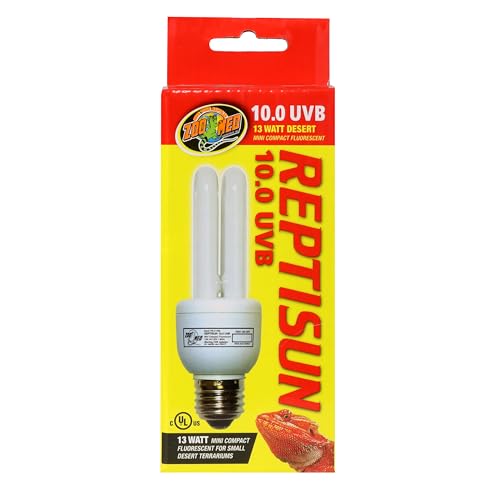
1. Zoo Med ReptiSun 10.0
Best Overall
Zoo Med ReptiSun 10.0
Pros
- •Broad UVB spectrum
- •Highly recommended by experts
- •Suitable for most enclosure sizes
- •Proven quality
Cons
- •Requires compatible fixture
- •Needs replacement every 6-12 months
- •Requires precise placement
Bottom Line
Fluorescent UVB tube offering broad spectrum lighting that is highly recommended for Ackie Monitors. Provides ideal UVA and UVB levels with UVI of 3-7 in basking areas.
2. Arcadia D3+ 12%
Premium Pick
Arcadia D3+ 12%
Pros
- •Highly recommended
- •Enhanced D3+ formulation
- •High UVB output
- •Excellent spectrum
Cons
- •Premium pricing
- •Requires replacement every 6-12 months
- •May be harder to find
Bottom Line
High-output fluorescent UVB bulb with enhanced D3 formula that is highly recommended as a premium UVB option for reptile care.
3. Zoo Med Powersun
Runner Up
Zoo Med Powersun
Pros
- •All-in-one UVB and heat solution
- •Convenient setup
- •Effective UVB output
Cons
- •More expensive than other options
- •Requires additional equipment to regulate heat
- •Risk of overheating without proper controls
Bottom Line
Mercury Vapor Bulb that combines both UVB and heat output in one bulb. Convenient but requires additional equipment to properly regulate temperature.
4. Exo Terra Solar Glo
Best Value
Exo Terra Solar Glo
Pros
- •More natural and intense light
- •Energy-efficient
- •Great for basking areas
- •Proven brand quality
Cons
- •Requires compatible halogen fixture
- •Higher initial setup cost
Bottom Line
Halogen basking bulb that provides natural, intense light ideal for creating warm basking areas. More energy-efficient than traditional incandescent options.
5. Zoo Med Basking Spot Lamp
Budget Pick
Zoo Med Basking Spot Lamp
Pros
- •Popular and widely available
- •Good heat output
- •Readily available
- •Affordable
Cons
- •Less energy-efficient than halogen
- •Less intense light output
- •Shorter lifespan
Bottom Line
Traditional incandescent basking bulb that provides good heat output and is readily available. Popular choice but less energy-efficient than newer alternatives.
6. Fluker's LED Reptile Lamp
Best for Ambient
Fluker's LED Reptile Lamp
Pros
- •Energy-efficient
- •Good ambient lighting
- •Minimal heat output
- •Long lifespan
Cons
- •Does not provide adequate heat alone
- •Requires supplementation with other lights
Bottom Line
Energy-efficient LED bulb ideal for ambient lighting without significant heat output. Great option for supplementing UVB and basking lights.
7. Zoo Med PowerSun Compact Fluorescent
Runner Up
Zoo Med PowerSun Compact Fluorescent
Pros
- •Energy-efficient
- •Good general lighting
- •Can supplement UVB
- •Cost-effective
Cons
- •Not a complete solution alone
- •Requires combination with other lights
Bottom Line
Compact fluorescent bulb that provides energy-efficient general lighting and can supplement UVB and basking lights in an enclosure setup.
8. Zoo Med Nightlight Red Bulb
Best for Night
Zoo Med Nightlight Red Bulb
Pros
- •Low-wattage option
- •Maintains nighttime warmth
- •Minimal light disruption
- •Affordable
Cons
- •Only suitable for nighttime use
- •Not primary heating source
- •Limited temperature range
Bottom Line
Low-wattage infrared heat bulb designed for nighttime use to maintain warm basking areas when main lights are off. Minimal light disruption during dark cycle.
9. Zoo Med Natural Sand
Best for Naturalism
Zoo Med Natural Sand
Pros
- •Natural appearance
- •Mimics natural environment
- •Good substrate choice
- •Absorbs moisture evenly
Cons
- •Harder to clean than carpet
- •May cause impaction if ingested
- •Requires weekly replacement
Bottom Line
Natural substrate option that mimics the Ackie Monitor's arid habitat. More natural appearance but requires more maintenance than reptile carpet.
10. Exo Terra Forest Vines
Best for Enrichment
Exo Terra Forest Vines
Pros
- •Allows climbing and exploration
- •Sturdy construction
- •Great enrichment option
- •Encourages natural behavior
Cons
- •Requires regular cleaning
- •Needs inspection for wear
- •Takes up enclosure space
Bottom Line
Sturdy climbing vines and branches that provide enrichment opportunities for active Ackie Monitors to climb and explore their enclosure.
Ackie Monitor UVB Requirements
UVB lighting is critical for the health of your Ackie Monitor. It helps in the synthesis of Vitamin D3, which is essential for calcium metabolism and overall bone health. Here's what you need to know:
UVB Spectrum
Ackie Monitors require a UVB spectrum that mimics natural sunlight. The best UVB bulbs for Ackie Monitors are those that provide a UVI (UV Index) of 3-7 in the basking area and 1-2 in the rest of the enclosure.
Types of UVB Bulbs
- Fluorescent Tubes: These are a popular choice because they provide a broad UVB spectrum. Brands like [Zoo Med ReptiSun 10.0](https://www.amazon.com/dp/B00A8RHTYU?tag=krawlo-20 and [Arcadia D3+ 12%](https://www.amazon.com/dp/B09T8X6MQ2?tag=krawlo-20 are highly recommended.
- Mercury Vapor Bulbs (MVB): These bulbs provide both UVB and heat, making them a convenient option. However, they can be more expensive and may require additional equipment to regulate heat. Popular brands include [Zoo Med Powersun](https://www.amazon.com/dp/B0002AQDJ0?tag=krawlo-20
Placement of UVB Bulbs
- Height: Place the UVB bulb at the recommended height for your enclosure. For most setups, this is about 6-12 inches above the basking spot.
- Distance: Ensure the UVB light is not blocked by glass or plastic, as these materials can filter out UVB rays. Use a wire mesh or reptile screen instead.
- Duration: Keep the UVB light on for 12 hours a day, similar to the natural day length.
General Lighting for Ackie Monitors
In addition to UVB, Ackie Monitors need a general light source to create a temperature gradient and simulate daylight. This is typically achieved with a combination of basking lights and ambient lights.
Basking Lights
Basking lights are essential for creating a warm basking area in your Ackie Monitor's enclosure. The basking area should be the hottest spot, typically between 110-120°F (43-49°C). You can use halogen or incandescent bulbs for this purpose.
- Halogen Bulbs: These bulbs provide a more natural and intense light, which is great for basking. They are also energy-efficient. Consider the Exo Terra Solar Glo.
- Incandescent Bulbs: These are a more traditional option and are readily available. They provide good heat but may not be as energy-efficient as halogen bulbs. The [Zoo Med Basking Spot Lamp](https://www.amazon.com/dp/B07F449L8J?tag=krawlo-20 is a popular choice.
Ambient Lights
Ambient lights help to light up the entire enclosure and create a more natural environment. They can be used in combination with UVB and basking lights to achieve the desired temperature and lighting conditions.
- LED Bulbs: These are energy-efficient and provide good lighting without much heat. They are ideal for ambient lighting. The Fluker's LED Reptile Lamp is a great option.
- Compact Fluorescent Bulbs: These bulbs are also energy-efficient and provide good general lighting. They can be used to supplement UVB and basking lights. The [Zoo Med PowerSun Compact Fluorescent](https://www.amazon.com/dp/B00A8RI8TK?tag=krawlo-20 is a good choice.
Day and Night Cycles
Maintaining a consistent day and night cycle is important for your Ackie Monitor's health. Use a timer to ensure the lights turn on and off at the same time each day. This helps in regulating their biological clock and ensures they have enough time to rest and digest food.
Temperature at Night
At night, the temperature in the enclosure should drop to a range of 70-80°F (21-27°C). While no UVB or basking lights are needed, a low-wattage infrared heat lamp can help maintain a warm basking area. The Zoo Med Nightlight Red Bulb is a good option for this.
Reptile Housing and Enclosure Setup
The right housing is crucial for the well-being of your Ackie Monitor. Here are some key elements to consider:
Size of the Enclosure
Ackie Monitors are active and need plenty of space to move around and explore. A spacious enclosure is essential. For a single adult Ackie Monitor, a minimum size of 4 feet long, 2 feet wide, and 2 feet tall is recommended. Larger enclosures are always better.
Substrate
The substrate you choose should be safe, easy to clean, and mimic their natural environment. Some popular options include:
- Reptile Carpet: Non-toxic and easy to clean, but may not provide the most natural environment. [link to product](https://www.amazon.com/dp/B09FWYM772?tag=krawlo-20
- Sand: More natural, but can be harder to clean and may cause impaction if ingested. [Zoo Med Natural Sand](https://www.amazon.com/dp/B00PMBLY2A?tag=krawlo-20 is a good choice.
- Newspaper or Paper Towels: Simple and inexpensive, making them ideal for juveniles or during health issues. [link to product](https://www.amazon.com/dp/B0DF8RSVJK?tag=krawlo-20
Decoration and Enrichment
Ackie Monitors are curious and active reptiles, so providing a variety of decorations and enrichment objects is important. Some ideas include:
- Hiding Spots: These provide a sense of security and help reduce stress. Cork bark, half logs, and rock caves are excellent choices. [link to product](https://www.amazon.com/dp/B0DZSM5KS2?tag=krawlo-20
- Branches and Vines: These allow your Ackie Monitor to climb and explore. Use sturdy branches that can support their weight. [Exo Terra Forest Vines](https://www.amazon.com/dp/B0G6FDMX6Z?tag=krawlo-20 are a great option.
- Plants: Live or artificial plants can add to the enclosure's aesthetics and provide additional hiding spots. Ensure the plants are safe for reptiles. [link to product](https://www.amazon.com/dp/B09KKRCTYC?tag=krawlo-20
Heating
Ackie Monitors require a temperature gradient in their enclosure to regulate their body temperature. Here’s how to set it up:
- Basking Area: The basking spot should be around 110-120°F (43-49°C). Use a basking light to achieve this temperature.
- Cool End: The cool end of the enclosure should be around 75-85°F (24-29°C). This allows your Ackie Monitor to cool down if needed.
- Nighttime Temperature: At night, the temperature should drop to 70-80°F (21-27°C). You can use a low-wattage infrared heat lamp if necessary.
Humidity
Ackie Monitors come from arid regions, so they prefer a low humidity environment. The ideal humidity level is around 30-50%. You can monitor this with a hygrometer and provide a humid hide for shedding. [link to hygrometer](https://www.amazon.com/dp/B01H1R0K68?tag=krawlo-20
UVB Lighting in Detail
UVB lighting is one of the most critical aspects of keeping an Ackie Monitor. Here’s a deeper look at why it’s important and how to choose the right bulb:
Importance of UVB
UVB light helps your Ackie Monitor synthesize Vitamin D3, which is crucial for calcium absorption. Without adequate UVB, they can develop metabolic bone disease (MBD), which can be fatal.
Choosing the Right UVB Bulb
- ** Spectrum**: Look for bulbs that provide a UVI of 3-7 in the basking area and 1-2 in the rest of the enclosure.
- ** Wattage**: The wattage depends on the size of your enclosure. For a 4-foot enclosure, a 5.0 or 10.0 UVB bulb is typically sufficient.
- ** Brand**: Choose reputable brands like Zoo Med, Arcadia, and Repti Glo. These brands have been tested and are known for their quality and effectiveness.
Maintenance and Replacement
UVB bulbs degrade over time and need to be replaced. Most bulbs last around 6-12 months, but it’s a good idea to check the UVI output regularly with a UV meter. Replace the bulb if the UVI falls below 1.
Diet and Feeding
While lighting is crucial, a balanced diet is equally important for your Ackie Monitor. They are primarily insectivorous but can also benefit from a varied diet that includes:
- Insects: Crickets, dubia roaches, and mealworms are excellent choices. [link to dubia roaches](https://www.amazon.com/dp/B008PL5N8U?tag=krawlo-20
- Feeder Lizards:occasionally, you can offer feeder lizards like anole or house geckos. Ensure they are gut-loaded and dusted with calcium and multivitamin supplements.
- Commercial Diets: Some keepers use commercial diets to supplement their Ackie Monitor’s diet. Look for high-quality, insect-based diets.
Feeding Schedule
- Juveniles: Feed juveniles daily to support their fast growth.
- Adults: Feed adults every 2-3 days to maintain a healthy weight.
| Age Group | Frequency | Portion Size |
|---|---|---|
| Juveniles | Daily | 3-5 insects |
| Adults | Every 2-3 days | 5-7 insects |
Handling and Interaction
Ackie Monitors can be quite tame and enjoy handling, but it’s important to do it correctly to avoid stress and injury.
Tips for Handling
- Start Slow: Gradually introduce handling, starting with short sessions.
- Support: Always support your Ackie Monitor’s body and limbs when handling.
- Avoid Sudden Movements: Quick movements can startle them and cause stress.
Bonding
Spending time with your Ackie Monitor can help you bond with them. Try to interact with them during feeding times or when they are most active. Regular, gentle handling can also help them become more comfortable with you.
Cleaning and Hygiene
Maintaining a clean enclosure is crucial for the health of your Ackie Monitor. Here’s a quick guide to cleaning:
Daily Cleaning
- Spot Clean: Remove any feces, uneaten food, or debris from the enclosure daily.
- Check Water: Ensure the water dish is clean and filled with fresh water.
Weekly Cleaning
- Deep Clean: Clean the substrate and all decorations with a reptile-safe disinfectant weekly. [link to disinfectant](https://www.amazon.com/dp/B0006G5F0S?tag=krawlo-20
- Replace Substrate: If using loose substrate, replace it every week to prevent the accumulation of harmful bacteria.
Monthly Cleaning
- Thorough Clean: Every month, thoroughly clean the entire enclosure, including the glass, walls, and lighting fixtures. This helps in maintaining a hygienic environment.
Keep Reading About Ackie Monitor Care
- Best UVB Light for Crested Gecko: Ultimate Care Guide
- Best Heat Lamps For Reptiles Comparison
- Best Reptile UVB Light: Top Picks & Buyer's Guide
These guides can provide additional insights into the best practices for lighting and heating in reptile care, which are useful for keeping your Ackie Monitor healthy and happy.
Conclusion
Setting up the best lighting for your Ackie Monitor is a combination of providing the right UVB and general lighting, maintaining a proper day and night cycle, and ensuring the temperature and humidity are within the ideal range. By following the tips and recommendations in this guide, you can create a thriving environment for your pet. Remember, a well-lit and well-maintained enclosure is the foundation of a healthy Ackie Monitor.
Once your lighting is dialed in, make sure the enclosure itself meets your ackie's space and material needs — our Best Ackie Monitor Enclosure: Top Picks for 2026 covers PVC, wood, and glass options with specific product recommendations.
Our Final Verdict
Zoo Med ReptiSun 10.0
Fluorescent UVB tube offering broad spectrum lighting that is highly recommended for Ackie Monitors. Provides ideal UVA and UVB levels with UVI of 3-7 in basking areas.

Arcadia D3+ 12%
High-output fluorescent UVB bulb with enhanced D3 formula that is highly recommended as a premium UVB option for reptile care.

Zoo Med Powersun
Mercury Vapor Bulb that combines both UVB and heat output in one bulb. Convenient but requires additional equipment to properly regulate temperature.
Frequently Asked Questions
Leopard geckos are nocturnal and don't require UVB lighting. However, they still need a day and night cycle, which can be provided with a low-wattage bulb or ambient room light.
References & Sources
- https://reptifiles.com/ackie-monitor-care/ackie-monitor-uvb-lighting/
- https://dubiaroaches.com/blogs/lizard-care/ackie-monitor-care-sheet
- https://reptifiles.com/ackie-monitor-care/ackie-monitor-temperatures-heating/
- https://reptifiles.com/ackie-monitor-care/how-to-set-up-ackie-monitor-enclosure-shopping-list/
Related Articles

Best Ackie Monitor Starter Kit for Beginners
Get the best Ackie monitor starter kit for a happy and healthy pet. Learn what to include and how to set up the perfect enclosure for your Ackie monitor.

Best Ackie Monitor Heating: Expert Setup Guide
Discover the best ackie monitor heating setup with expert picks, target temps, and thermostat tips to keep your ackie thriving in a proper thermal gradient.

Best Ackie Monitor Food: Complete Feeding Guide
Discover the best ackie monitor food options including dubia roaches, BSFL, and crickets. Complete feeding schedule, supplement guide, and foods to avoid.